In response to the political and humanitarian crisis triggered by the coup d’état in Mali in early 2012, Luxembourg deployed its emergency.lu satellite communications platform to support the humanitarian community operating in a rapidly deteriorating security environment. The Emergency Telecommunications Cluster (ETC) was formally activated on 5 April 2012, under the leadership of the World Food Programme (WFP), to provide critical communications services to responders addressing urgent humanitarian needs.
Context and Objectives
The crisis severely disrupted national infrastructure and limited access to reliable telecommunications, particularly as conflict intensified in northern regions. Humanitarian actors required secure and dependable communication systems to coordinate operations, ensure staff safety, and maintain situational awareness.
The emergency.lu deployment aimed to:
- Reinforce ETC capacity in providing secure communications and internet connectivity
- Enable effective coordination among humanitarian agencies
- Maintain operational continuity in a volatile and resource-constrained environment
Deployment and Technical Implementation
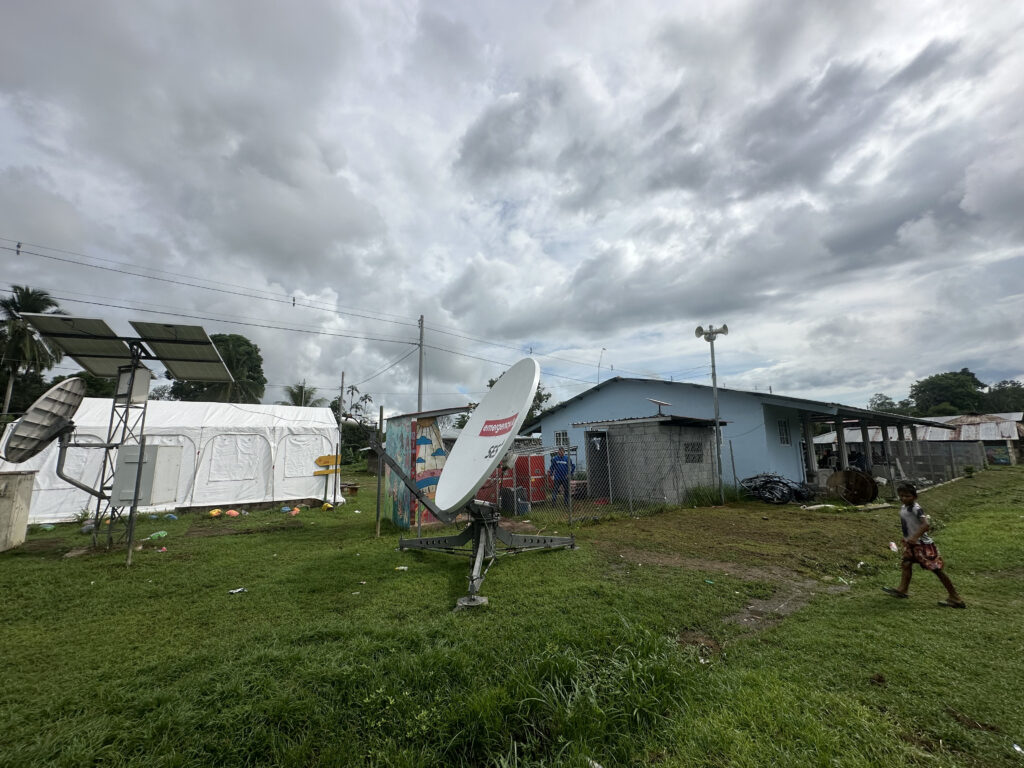
Luxembourg deployed NoSaCo Regular terminals and Ranger 2.4 satellite antennas as part of the emergency.lu system. The operational setup included:
- One active system deployed in Mopti, a key logistical hub supporting northern operations
- A second system positioned on standby in Bamako, ensuring operational redundancy and rapid scalability
The deployed platforms delivered a comprehensive communications package comprising:
- High-speed satellite internet connectivity shared across organizations
- Voice communication services supporting inter-agency coordination
- Data transmission capabilities for reporting and operational planning
- VHF/HF radio reprogramming services, enhancing secure field communications
These services supported more than 20 humanitarian organizations, including major UN agencies such as UNICEF, UNHCR, and UNDP, as well as numerous non-governmental organizations.
Operational Adaptation and Security Measures
Due to the evolving security situation—including the French-led military intervention in early 2013—the emergency.lu assets demonstrated operational flexibility. Systems were:
- Temporarily repositioned to Bamako to ensure personnel and asset security
- Maintained in a ready-to-deploy configuration to support rapid redeployment as conditions allowed
- Continuously assessed and inventoried to ensure scalability and responsiveness to changing operational needs
This adaptability ensured uninterrupted support to the humanitarian community despite fluctuating access and security constraints.
Coordination and Impact
By providing a shared communications backbone, emergency.lu enabled humanitarian actors to:
- Coordinate relief efforts more effectively across dispersed locations
- Maintain reliable communication links between field teams and coordination centres
- Enhance security management and situational awareness in high-risk areas
The integration of emergency.lu into the ETC framework ensured standardized service delivery and efficient resource sharing among partners.
Transition and Demobilisation
After approximately two years of sustained operations, the situation stabilised sufficiently for ETC services to be mainstreamed into regular humanitarian operations. As local capacity and systems improved:
- emergency.lu assets were progressively decommissioned and repatriated
- Responsibilities for communications services were transferred to longer-term operational structures