When Cyclone Enawo made landfall in north-eastern Madagascar on 7 March 2017, it struck with exceptional force, bringing torrential rains and winds of up to 300 km/h. The cyclone carved a destructive path across the country, flooding vast areas, destroying homes and infrastructure, and forcing thousands of people to flee. Entire regions were left isolated, with roads cut off and communications severely disrupted.
Although the Emergency Telecommunications Cluster (ETC) was not formally activated, the World Food Programme (WFP)—as global ETC lead—stepped in to coordinate telecommunications support alongside partners. Restoring connectivity was essential to enable humanitarian actors and national authorities to assess needs, coordinate relief, and manage the response across affected regions.
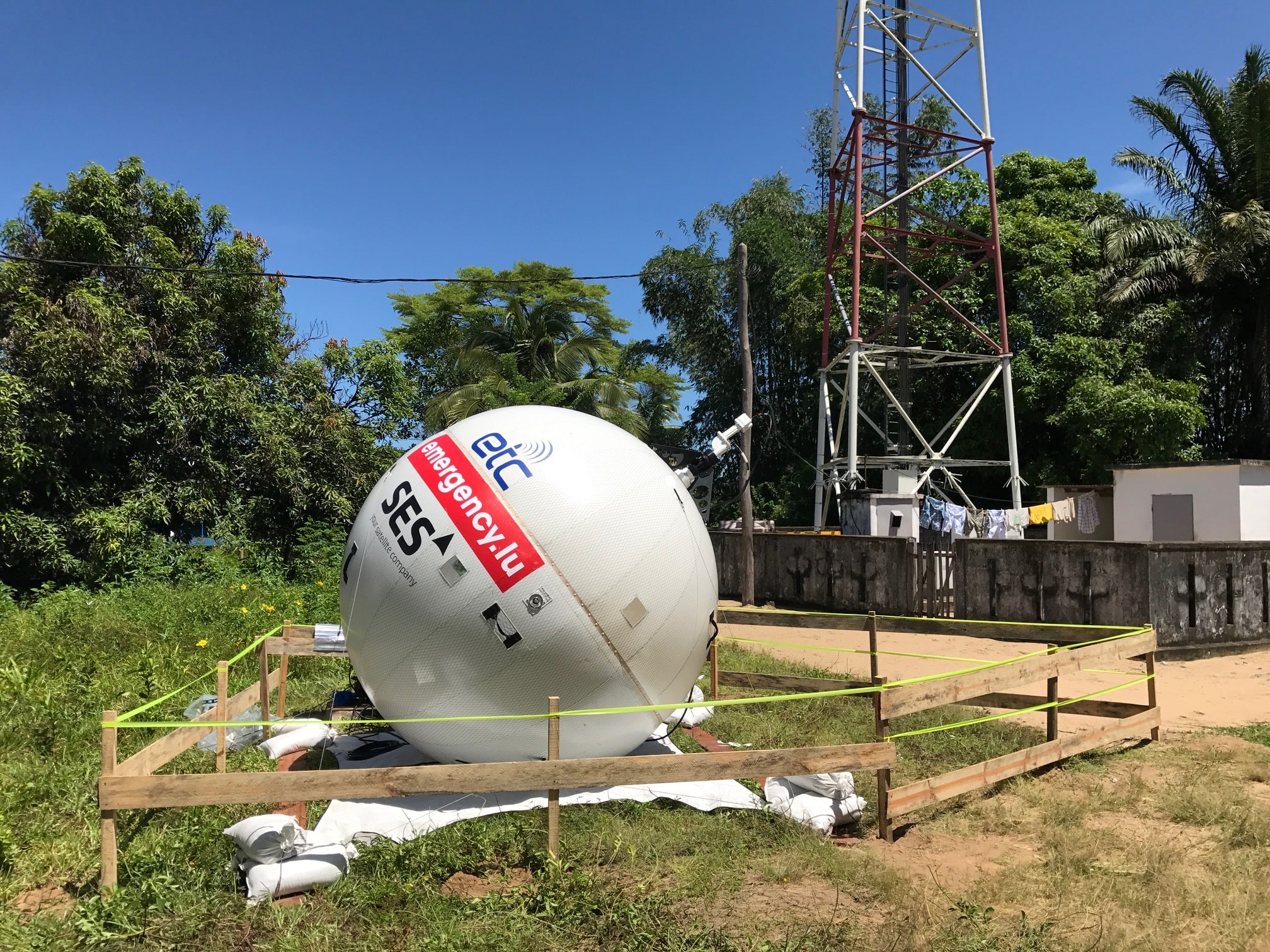
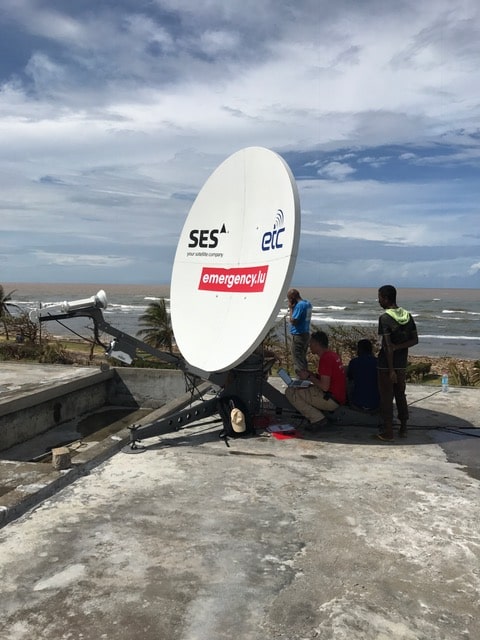
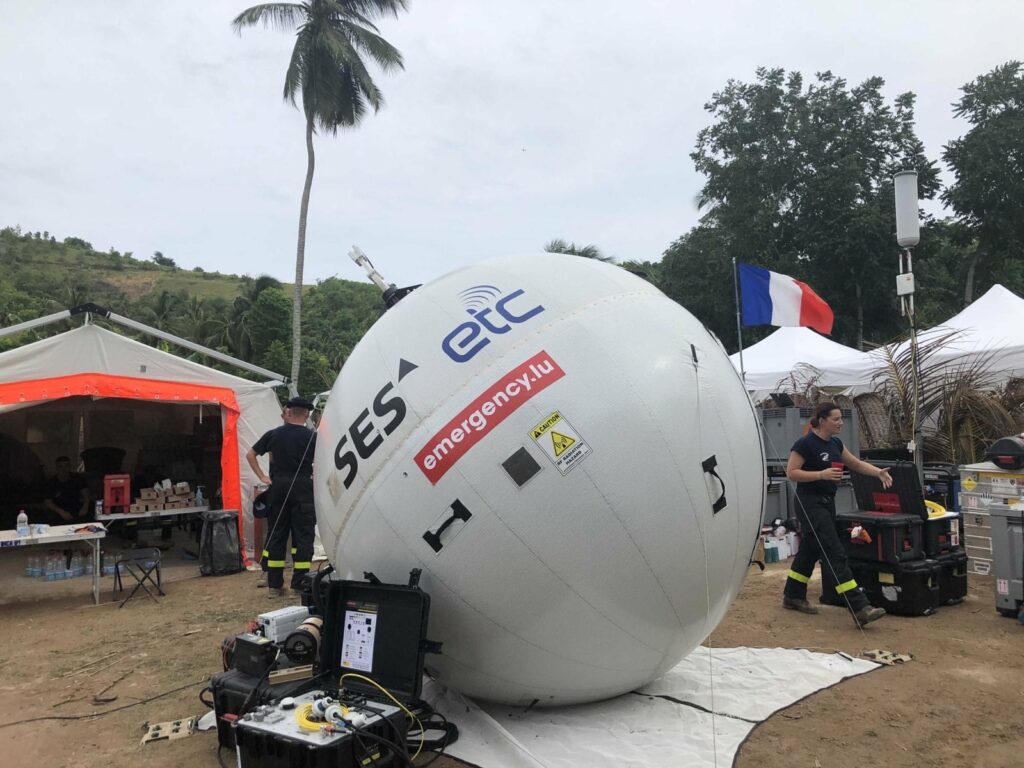
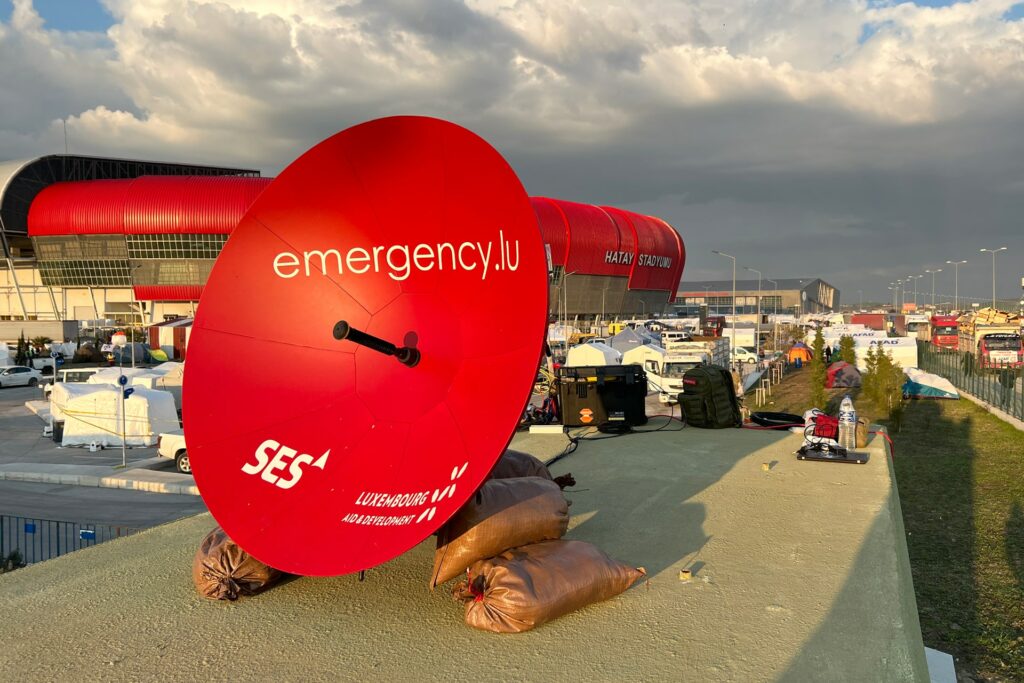
At WFP’s request, Luxembourg deployed emergency.lu to re-establish communications in some of the hardest-hit areas. Two satellite deployment kits were set up to provide connectivity at key coordination points:
- The Antalaha District Office in Antalaha
- The Maroansetra District Office in Maroansetra
These locations served as critical operational hubs for both humanitarian organisations and Madagascar’s National Disaster Management Office (BNGRC).
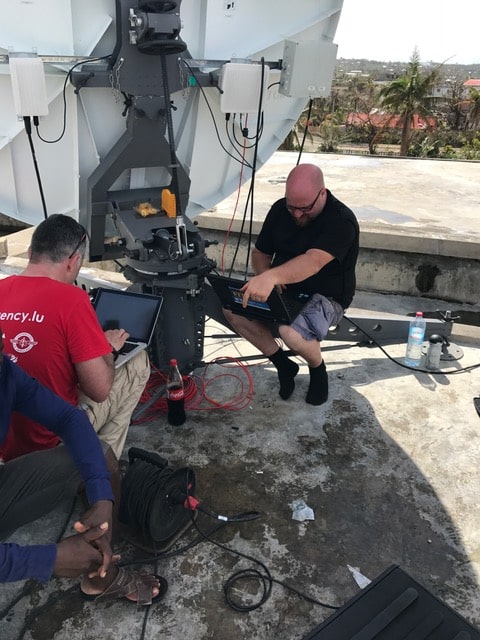
The deployment was carried out by two Luxembourg Civil Protection volunteers, supported by HIT VSAT specialists, who arrived in-country on 14 March 2017. One emergency.lu system was deployed directly by Luxembourg, while a second was mobilised from UN humanitarian stock in Dubai, ensuring rapid scaling of connectivity capacity.
Once operational, the systems provided reliable satellite-based internet access, enabling:
- Coordination between government authorities and humanitarian actors
- Real-time information exchange and needs assessments
- Support for logistics planning and response management in isolated areas
In an environment where terrestrial telecommunications had been heavily damaged, emergency.lu ensured a stable and independent communication backbone, allowing response efforts to function effectively despite challenging conditions.
The Madagascar operation demonstrated the importance of flexible deployment models, combining national assets with international stockpiles to respond quickly to sudden-onset disasters. It also highlighted emergency.lu’s role in supporting decentralised coordination, bringing connectivity directly to affected regions rather than relying solely on capital-based hubs.