In September 2019, Hurricane Dorian, one of the strongest Atlantic hurricanes on record, struck the Bahamas as a Category 5 storm, making landfall over the Abaco Islands on 1 September. With sustained winds reaching 300 km/h and storm surges of up to 7 metres, the hurricane caused catastrophic destruction across Abaco and Grand Bahama. Entire communities were flattened, critical infrastructure—including airports, ports, power grids, and telecommunications networks—was destroyed, leaving thousands of people isolated and in urgent need of assistance.
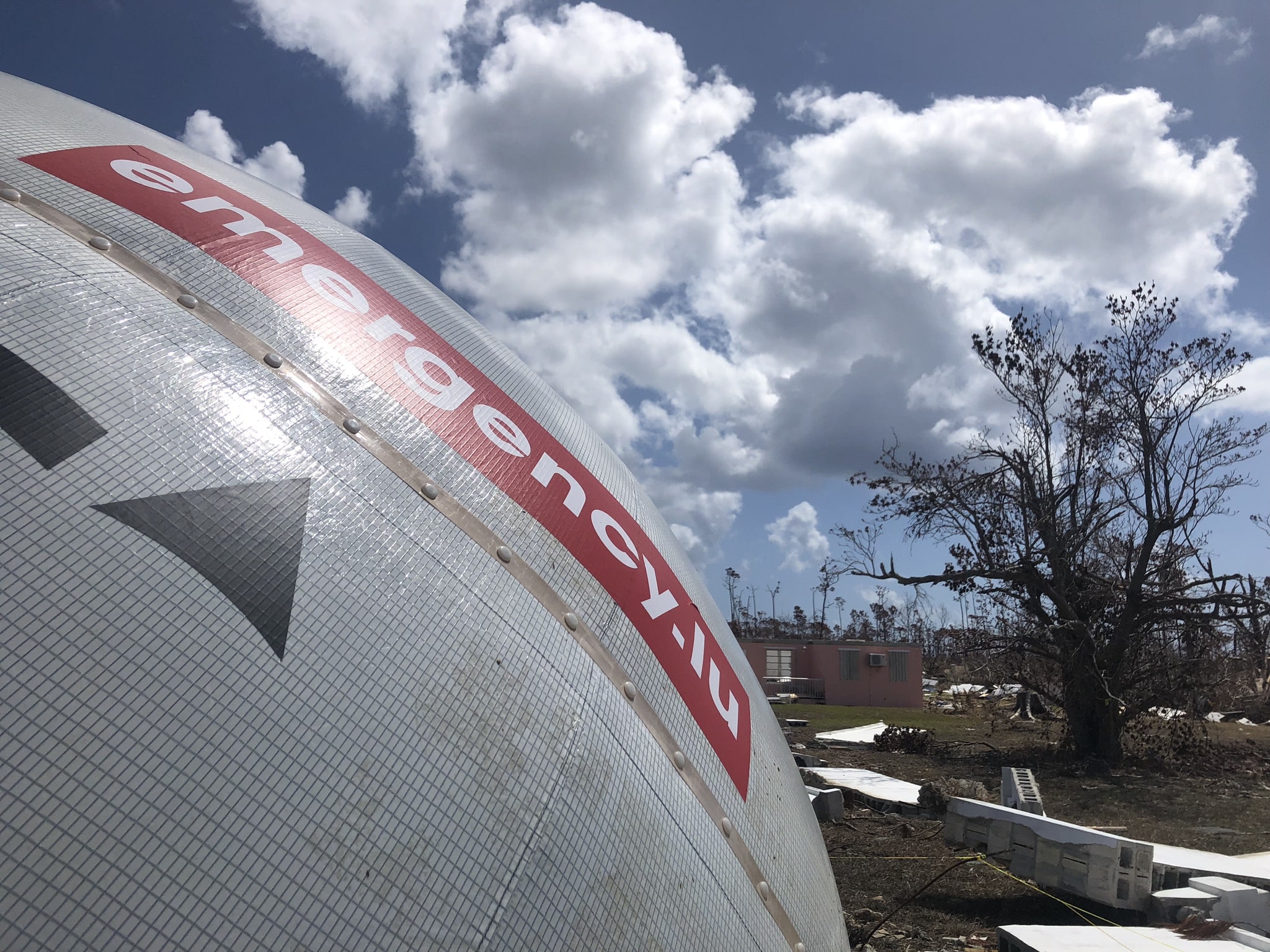
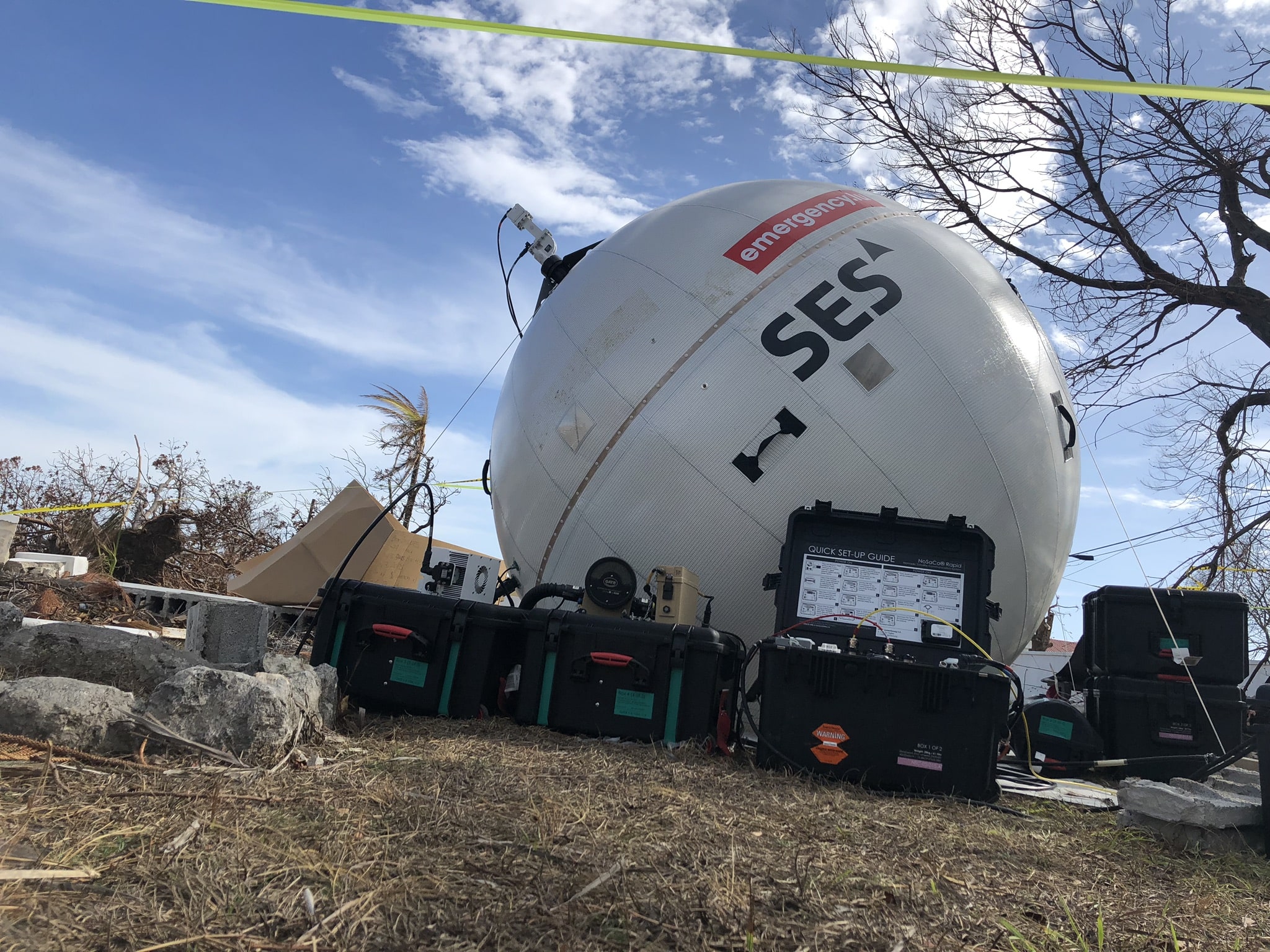
Following a request from the Government of the Bahamas, Luxembourg activated its emergency.lu Communication Team module through the EU Civil Protection Mechanism (EUCPM). A Rapid Deployment Kit, including a GATR inflatable satellite antenna system, was urgently prepared and shipped from Luxembourg as a temporary humanitarian export.
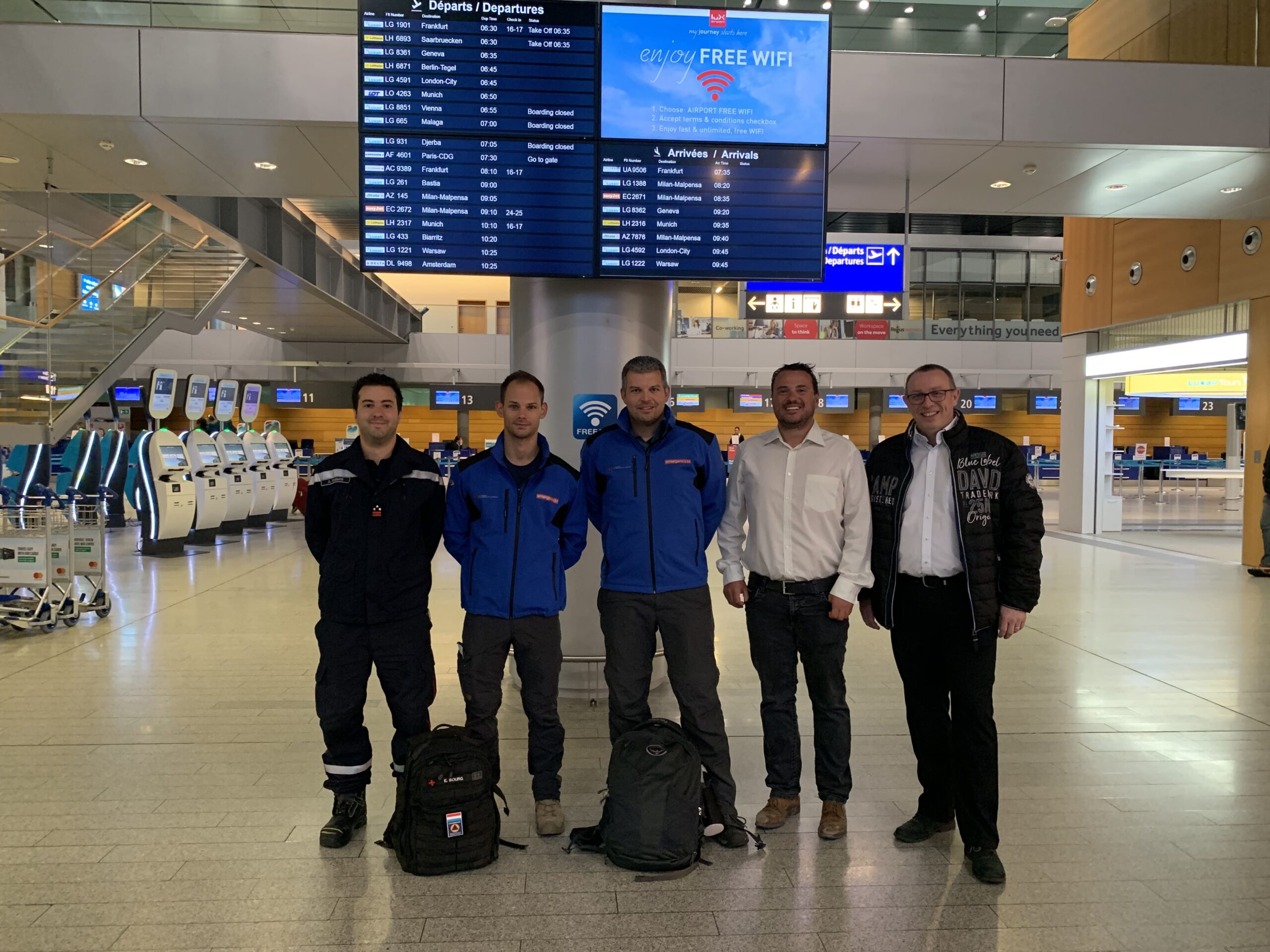
On 10 September 2019, two CGDIS Humanitarian Intervention Team (HIT) experts deployed to the Bahamas for a three-week mission. Travelling via Luxembourg, Frankfurt, Miami, and Nassau, they transported and installed the system under challenging post-disaster conditions.
Beyond the field hospital, the deployment also supported broader coordination efforts, including links with national emergency management structures (NEMA) and humanitarian partners conducting assessments and relief distribution for approximately 76,000 affected people.
Despite damaged infrastructure and logistical constraints, the inflatable GATR antenna allowed for rapid setup and immediate connectivity, proving especially valuable in environments where traditional installations were not feasible.