On 14 August 2021, a powerful magnitude 7.2 earthquake struck southern Haiti, causing widespread devastation across the departments of Sud, Grand’Anse, and Nippes. The disaster resulted in 2,248 fatalities and more than 12,200 injuries, while approximately 650,000 people were left in need of humanitarian assistance. Critical infrastructure suffered immense damage, with over 137,000 buildings destroyed or severely damaged, including homes, hospitals, and public facilities. The earthquake also triggered landslides and compounded existing vulnerabilities, as the country was already facing economic fragility and political instability. Overall losses were estimated at around $1.5 billion—roughly 10% of Haiti’s GDP.
One of the most immediate and critical impacts was the collapse of telecommunications infrastructure across the affected regions. With communications severely disrupted, humanitarian responders struggled to coordinate rescue operations, assess needs, and organize relief delivery in remote and hard-hit areas.
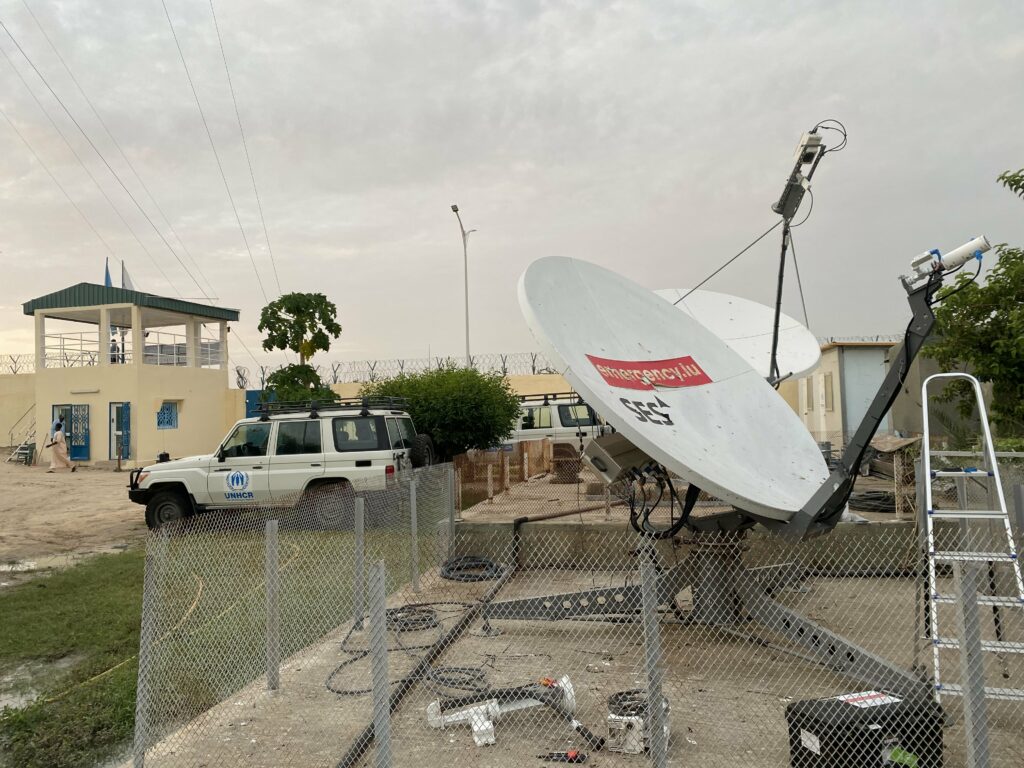
In response, and following an invitation from the Emergency Response Coordination Centre (ERCC) on 20 August 2021, Luxembourg rapidly activated emergency.lu. A deployment team travelled to Haiti on 23 August, carrying satellite communications equipment to restore connectivity in key operational locations.
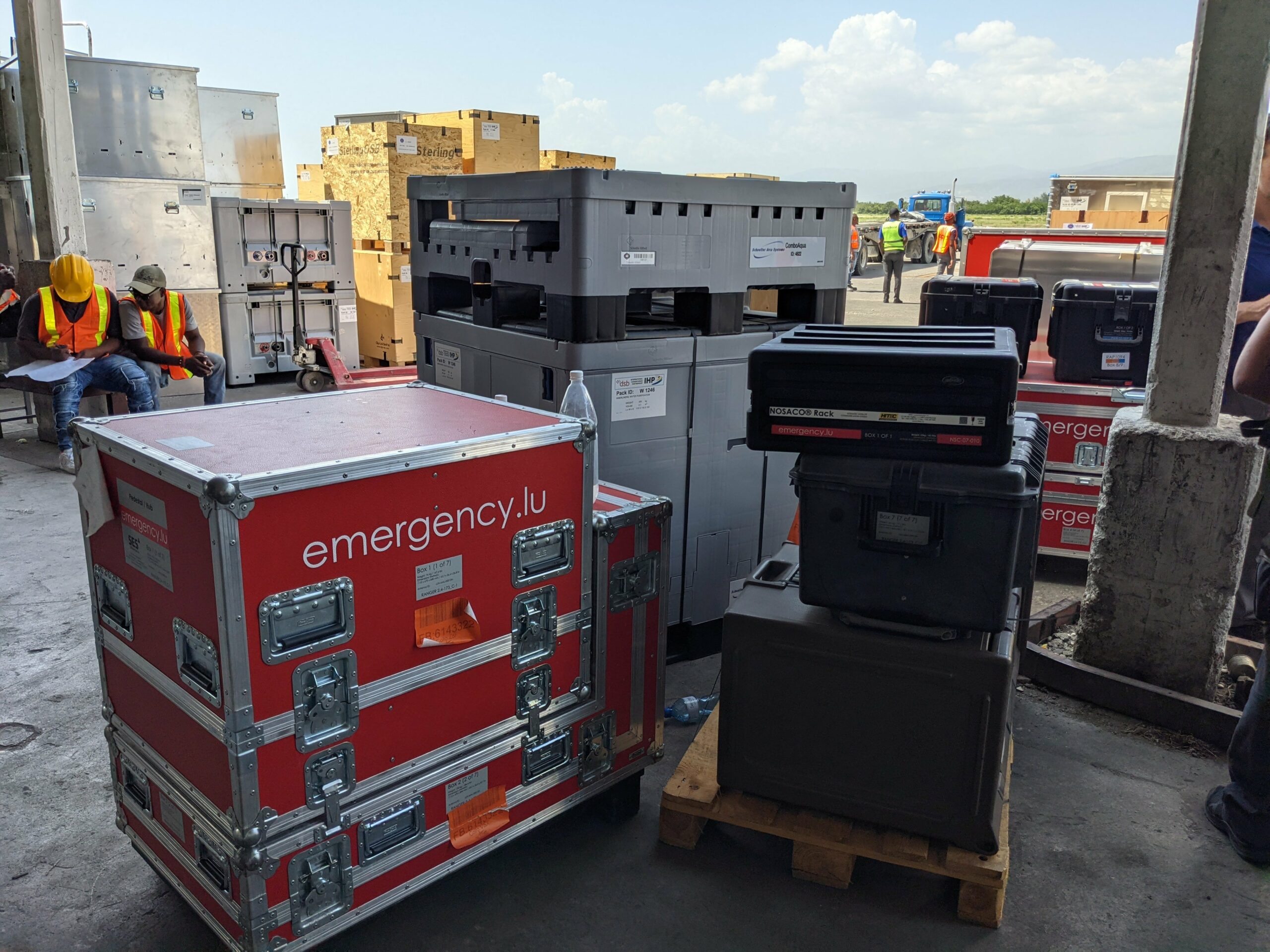
The mission focused on rapidly re‑establishing a reliable communications backbone in a complex and volatile environment marked by extreme heat, power outages, and civil unrest. The deployed solution included:
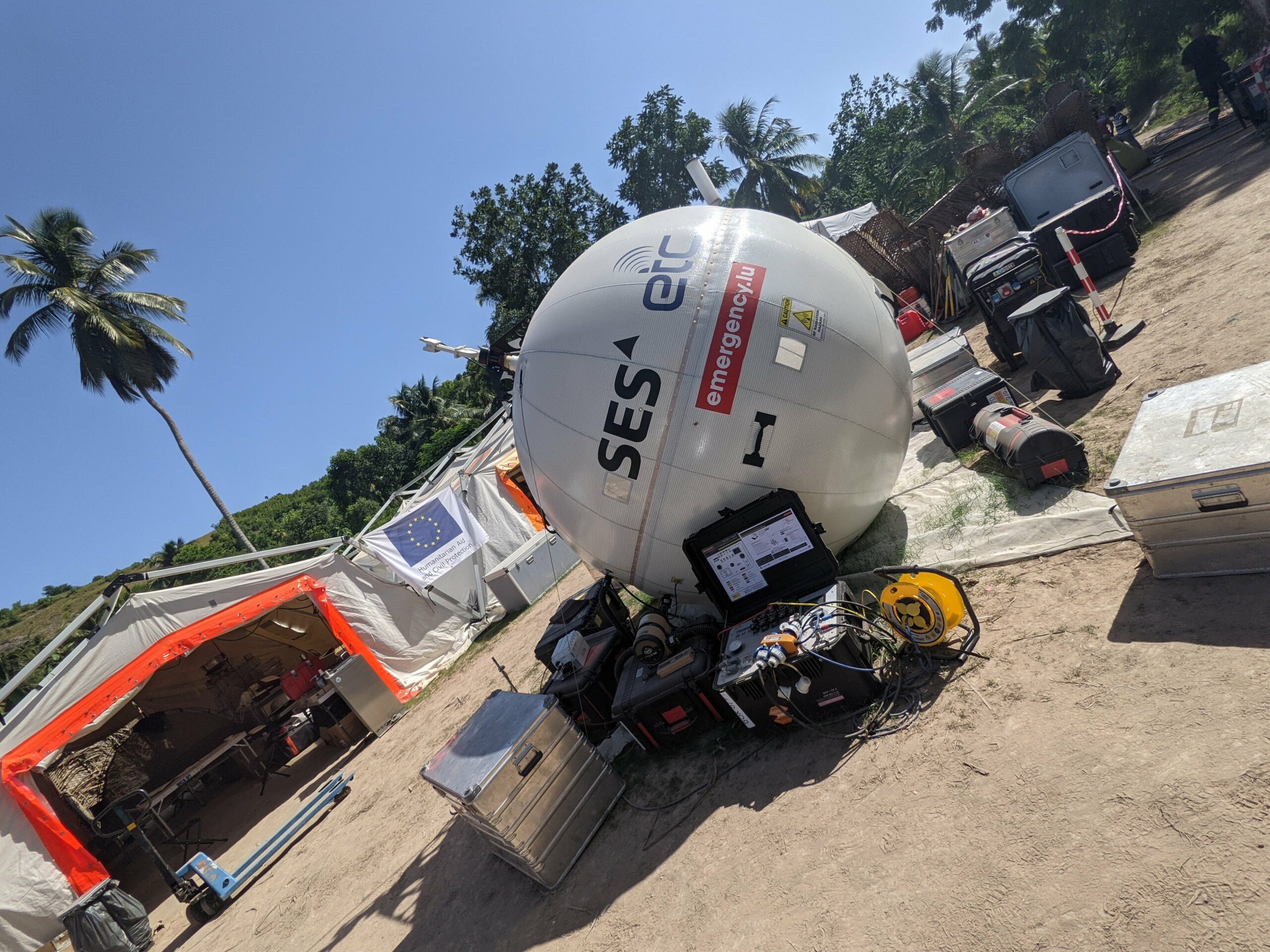
- 2.4 m inflatable GATR satellite antennas (including systems such as GATR170/1034)
- NoSaCo terminals providing internet and data services
- Power supply units (powerboxes) ensuring autonomous operation
- A secure VHF radio network supporting field coordination
Installations were carried out at critical response sites, including:
- A French Water humanitarian base in Cavaillon
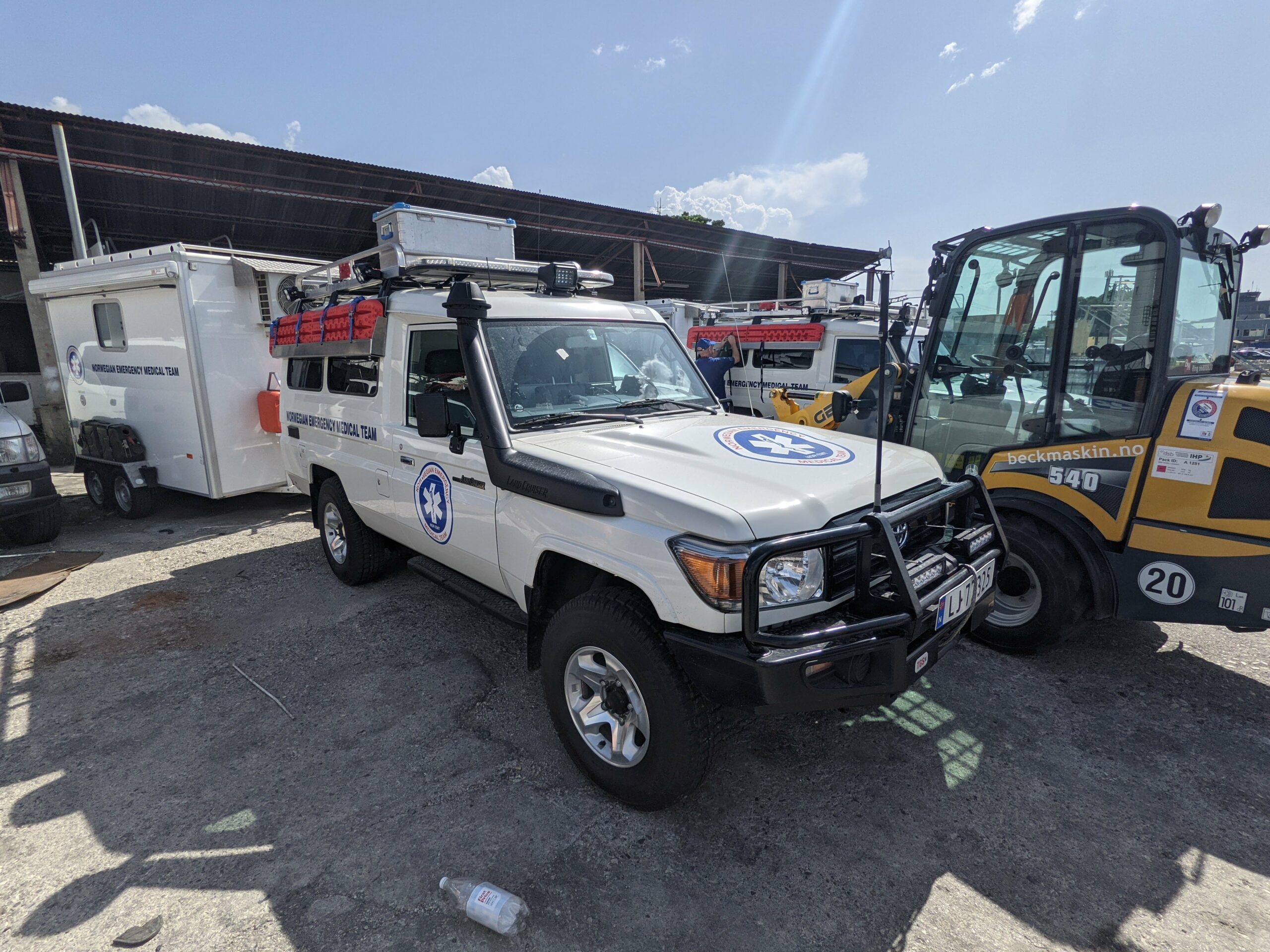
- A Norwegian emergency medical team (EMT) field hospital
- The OSOCC (On‑Site Operations Coordination Centre) and sub‑OSOCC locations
- WFP-supported coordination hubs in Les Cayes and Jérémie, where VHF radio communications were restored
Despite difficult conditions—including security incidents, fragile infrastructure, and logistical constraints—the emergency.lu systems quickly became operational.