In 2014, West Africa faced the largest Ebola virus disease (EVD) outbreak in history, primarily affecting Guinea, Liberia, and Sierra Leone. The epidemic caused widespread loss of life and placed enormous pressure on already fragile health systems across the region. Although Mali recorded only a limited number of cases, the risk of cross-border transmission and onward spread prompted a rapid international response to strengthen preparedness, surveillance, and coordination capacities.
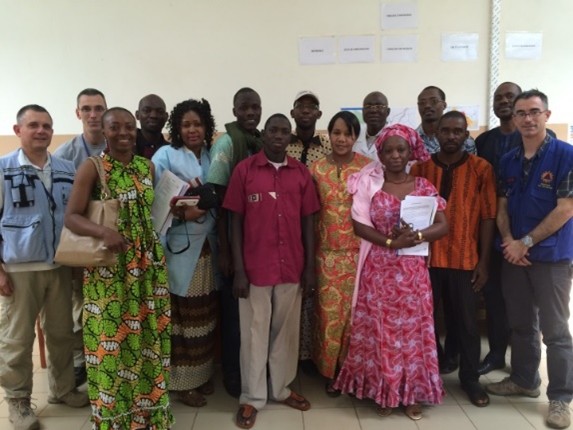
To support the Government of Mali and the international response architecture, a United Nations Disaster Assessment and Coordination (UNDAC) team was deployed. Within this framework, Luxembourg contributed through the International Humanitarian Partnership (IHP), deploying experts to reinforce the Emergency Operations Centre (EOC) in Bamako—where national authorities and international actors coordinated Ebola preparedness and response activities.
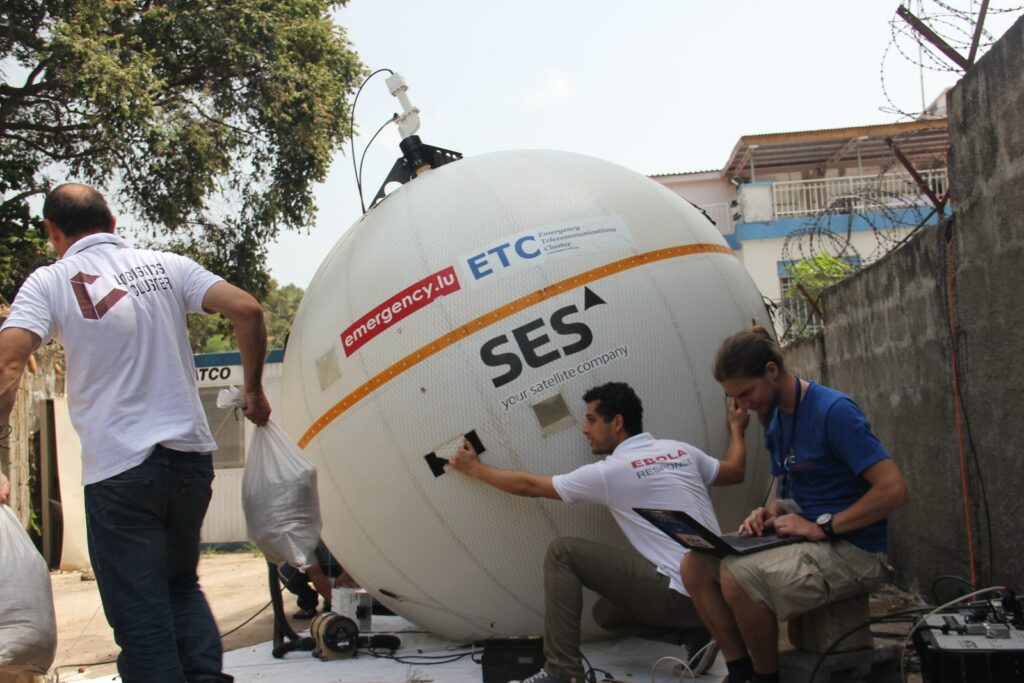
Luxembourg experts provided critical information and communications technology (ICT), administrative, and logistical support to ensure that UNDAC and the EOC could operate effectively in a high-pressure environment.
Upon arrival in December 2014, Gilles Hoffman immediately addressed a key operational gap: the absence of reliable connectivity and basic office infrastructure. Within just a few hours, a fully functional ICT environment was established, enabling UNDAC teams to operate effectively. A common network was set up, integrating internet access, shared storage, and printing capabilities. Initial connectivity relied on 3G networks, later enhanced by bridging into the existing EOC Wi-Fi infrastructure, ensuring more stable operations.
A core component of the deployment was the setup and optimisation of the EOC operations room ICT systems. Although hardware had been provided by partners such as USAID, it required configuration and integration. The IHP team installed and configured a Windows Server 2012 environment, enabling structured user management and shared data storage, which significantly improved coordination, information sharing, and operational control within the response structure.
Beyond infrastructure setup, the Luxembourg team also contributed to capacity building and sustainability. They provided basic training to EOC staff on the use and management of ICT systems, ensuring that local personnel could maintain and operate the systems independently. They also supported IT maintenance tasks, including system updates, data backup procedures, and general troubleshooting.
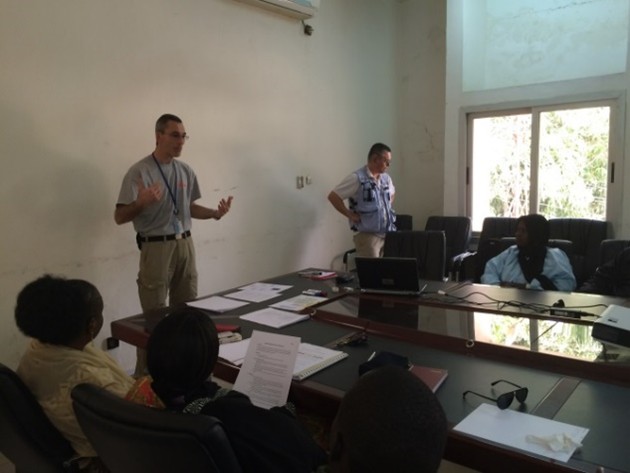
When Brice Tavernier deployed in early 2015, he further reinforced and expanded these capabilities. He reactivated and strengthened ICT systems within both the EOC and the On-Site Operations Coordination Centre (OSOCC), ensuring continuity between coordination platforms. Additional work included configuring an expanded pool of portable computers, installing necessary software, and ensuring all operational tools were fully functional.
A notable contribution was the development of a Standard Operating Procedure, which formalised the management and maintenance of EOC ICT equipment. This documentation ensured that systems remained operational beyond the deployment period and provided clear guidance for future use. During training sessions, technical support was continuously provided to users, reinforcing practical knowledge and confidence in operating the systems.
In parallel, the IHP team delivered administrative and logistical support, including office supplies, interpreter services, and general operational assistance—elements that are essential but often overlooked in emergency coordination settings.
The deployment highlighted how rapidly deployable ICT and support services are critical enablers of effective epidemic response, even in countries with limited case numbers. By ensuring that coordination structures such as the EOC and UNDAC were fully operational, emergency.lu and IHP support helped strengthen Mali’s capacity to manage the Ebola threat, improve preparedness, and maintain a high level of vigilance.
This operation demonstrated emergency.lu’s role within a broader international partnership framework, complementing technical infrastructure with coordination, training, and system development, and reinforcing the importance of robust information management systems in public health emergencies.