Some pieces of equipment are just tools. Others become silent witnesses to history.
Our Ranger‑170 antenna is firmly in the second category.
What is the Ranger‑170?
Within emergency.lu, she is simply called Ranger‑170.
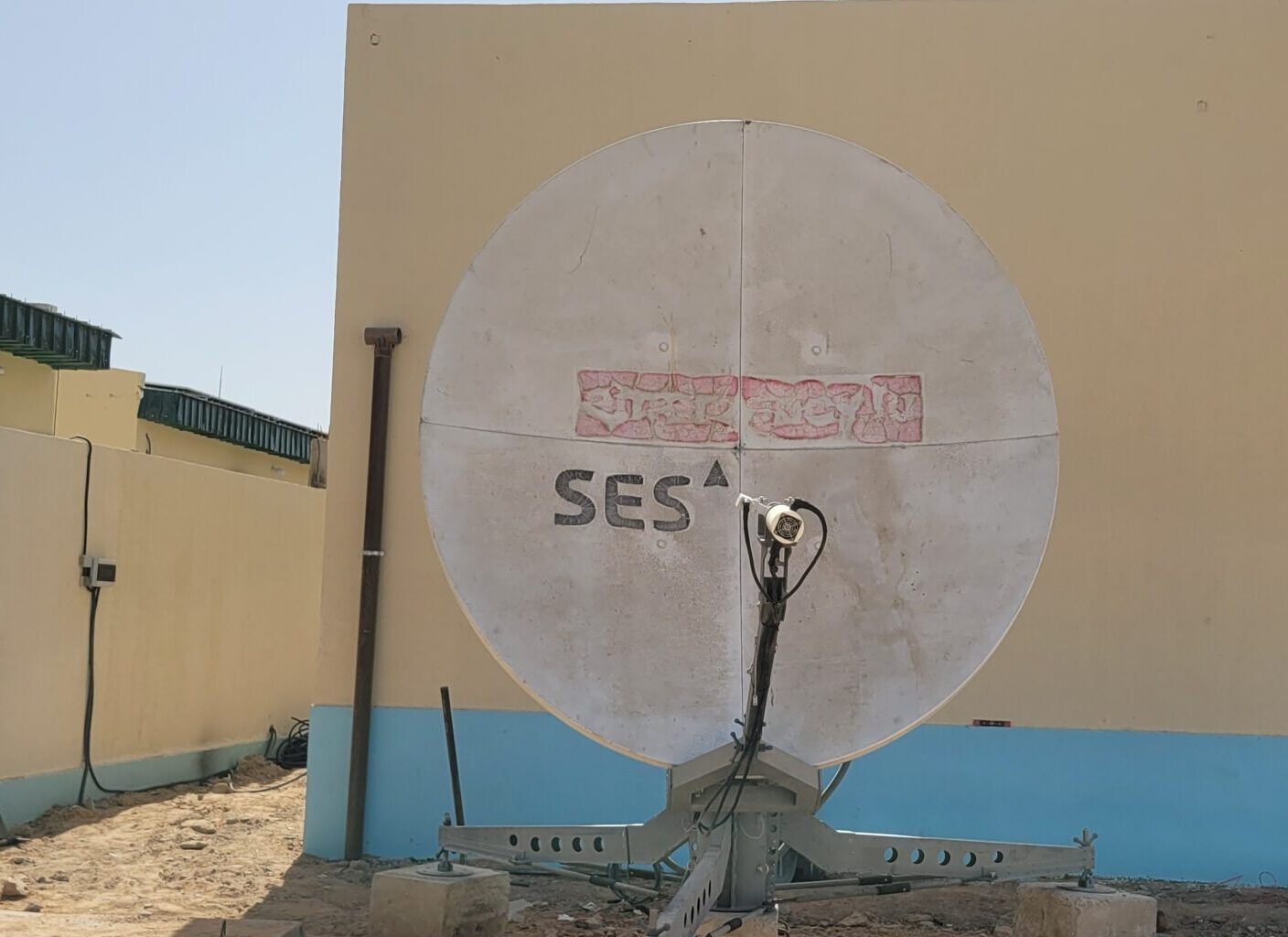
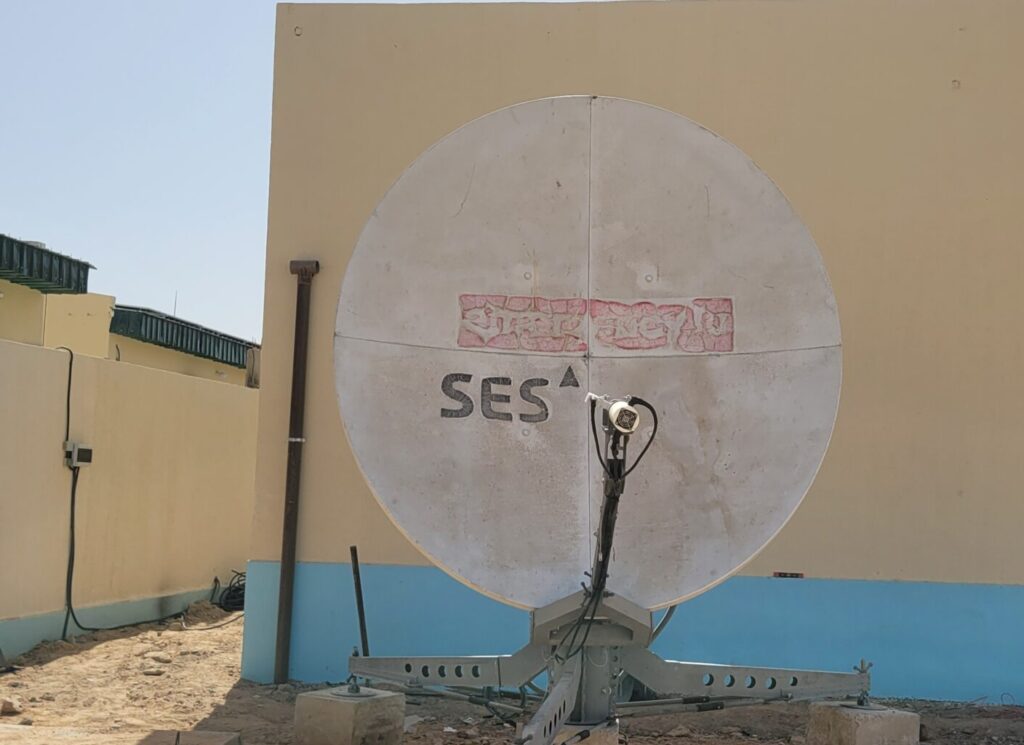
In technical terms, she is one of many 2.4‑metre Ranger 2400 VSAT terminals—a powerful, field‑proven satellite communications system built for the harshest environments.
At her core is a large 2.4 m segmented parabolic antenna, engineered for high signal gain and stable broadband connectivity over long distances. Her structure is designed to be both robust and deployable: transported in modular cases, assembled quickly in the field, and mounted on a stable tripod allowing precise azimuth, elevation, and polarization adjustment for accurate satellite pointing.
What makes her unique is her fully integrated and modular architecture:
- The feed system combines transmitter and receiver components
- She can operate across multiple frequency bands
- She connects to a wide range of network types
Designed for expeditionary use, Ranger‑170 thrives in extreme temperatures, strong winds, and remote locations. She is equally at home in flood plains, deserts, or conflict zones—where traditional infrastructure has failed or never existed.
In simple terms: Ranger‑170 is built to bring connectivity where nothing else can.
She Was There from the Beginning
The Ranger‑170 is not just another asset in the emergency.lu fleet.
She has been there since the early days.
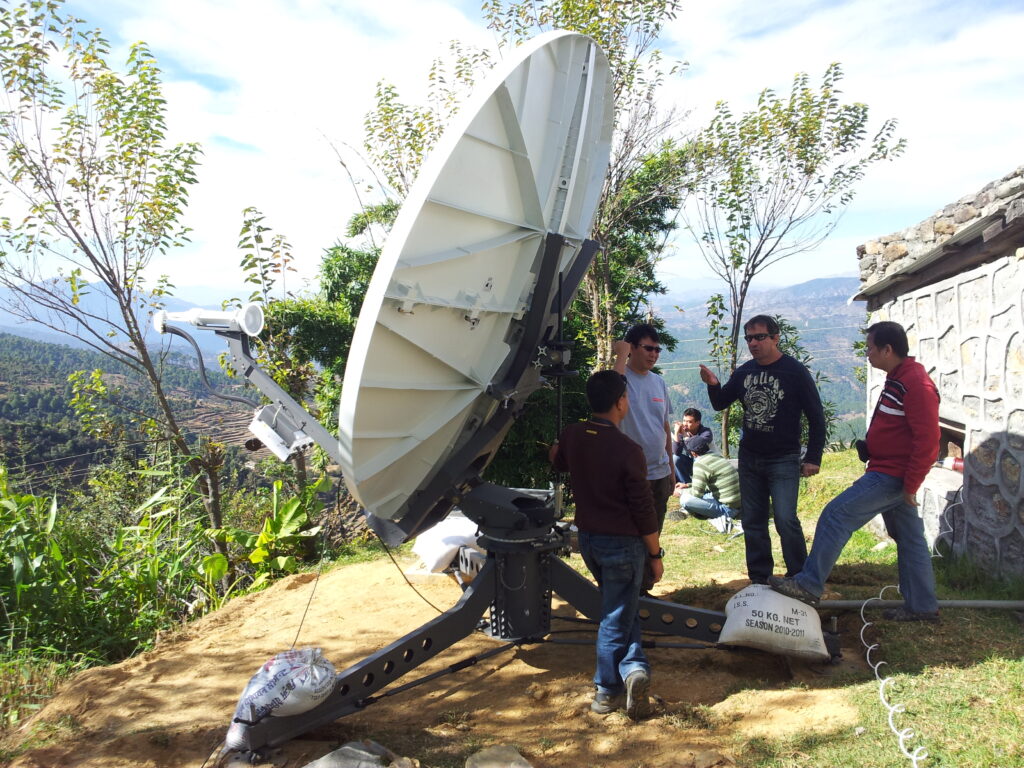
Her first recorded deployment dates back to 2012, when she travelled to Nepal, where she helped restore communications in the aftermath of flooding in Dadeldhura. At that time, emergency.lu itself was still proving its concept—deployable satellite connectivity for humanitarian response.
And she delivered.
For three years, until mid‑2015, she remained operational in the field—quietly supporting coordination where roads were scarce and networks unreliable.
Read more about the Dadeldhura Operation here.
A Well‑Deserved Overhaul
By 2015, she had earned a rest.
Back in Luxembourg, the Ranger‑170 underwent a full refurbishment:
- Structural elements of the antenna were overhauled
- Active RF components were carefully serviced and upgraded
- Systems were tested and recalibrated for a new operational life
This was not just maintenance. It was a commitment to sustainability—a deliberate effort to extend the lifespan of high-quality equipment rather than replace it.
Back to the Field: Lake Chad Basin
Her second life began in early 2018, when she was deployed to Baga‑Sola, Chad, at the heart of the Lake Chad crisis.
There, she stood firm.
For more than seven years, the Ranger‑170 supported UNHCR and humanitarian partners, providing reliable connectivity in one of the region’s most remote and fragile environments. Refugee influxes, security incidents, extreme heat, dust—she experienced it all.
Read more about the Baga-Sola Operation here.
Of course, like any veteran, she required care along the way:
- Periodic maintenance interventions
- System upgrades to keep pace with operational needs
- Adjustments to evolving field conditions
But she stayed operational—year after year.
Still on the Move
In May 2025, her journey continued.
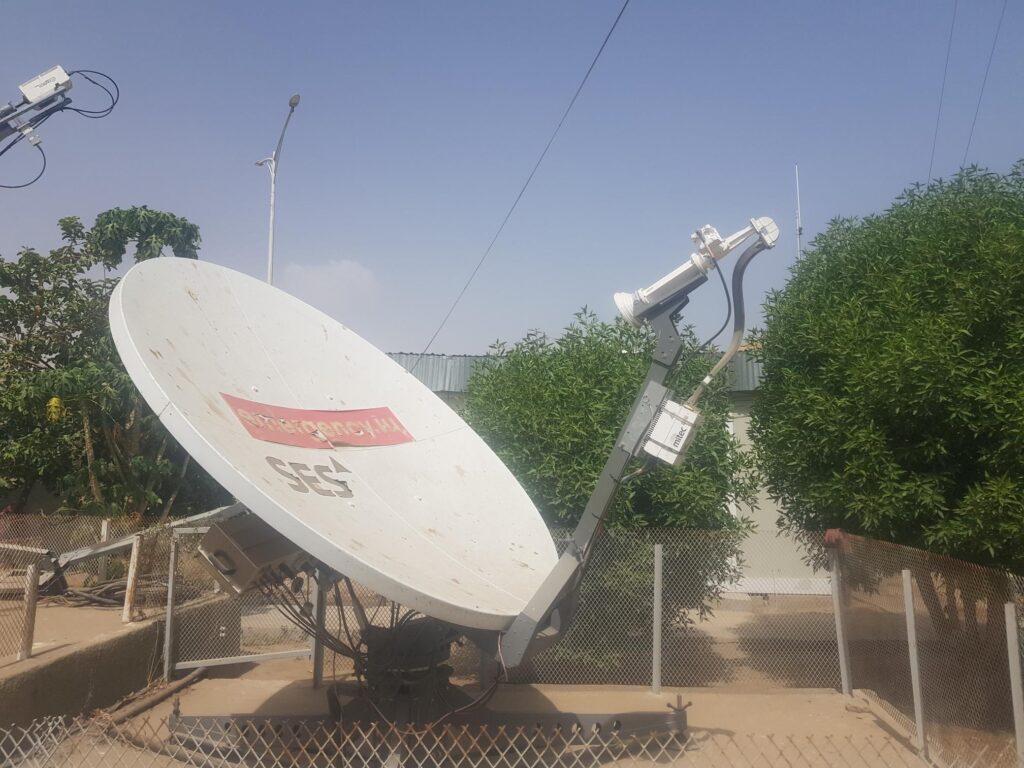
She was relocated from Baga‑Sola to Birak, maintaining her mission of supporting UNHCR operations in Chad.
And then, just last week, she moved again—this time to Guereda, where she now supports humanitarian operations responding to the latest regional crises.
Same antenna.
Different crises.
Same mission.
More Than Hardware
If the Ranger‑170 could speak, she would tell stories of:
- Flooded valleys in Nepal
- Refugee camps under the Sahel sun
- Nights powered by generators and solar batteries
- Teams relying on her signal to coordinate life‑saving assistance
She has seen the evolution of emergency.lu itself—from its first deployments to a mature global capability.
A Testament to Sustainability
In a world where technology is often replaced rather than repaired, the Ranger‑170 tells a different story.
At emergency.lu, equipment is:
- Maintained
- Refurbished
- Reused across missions and continents
This is not only cost‑effective—it is operationally resilient and environmentally responsible.
The Ranger‑170 stands as a living proof of this philosophy:
With the right care and expertise, critical humanitarian tools can serve for decades, not just years.
Still Standing
Today, somewhere in eastern Chad, the Ranger‑170 is once again pointed skyward—linking teams, enabling coordination, and supporting people in need.
She may not make headlines.
But without her, many operations simply would not function.
And after more than a decade in the field, one thing is certain:
She’s not done yet.