In late 2014, at the height of the West African Ebola epidemic, Guinea remained one of the countries most severely affected by the outbreak. The crisis, marked by high mortality rates and rapid transmission, placed immense pressure on healthcare systems and highlighted the urgent need for fast, reliable diagnostic capabilities to identify infected patients and contain the spread of the virus.
To address this challenge, emergency.lu supported the deployment of the B-LiFE (Belgian Laboratory for Infectious Diseases in Emergencies) initiative, a multidisciplinary partnership uniting public, private, and academic actors. Led by the Centre de Technologies Moléculaires Appliquées (CTMA) of the Université Catholique de Louvain and supported by partners including ESA and SES, B-LiFE was designed to deliver rapid, mobile laboratory capacity for the detection of infectious diseases in crisis environments.
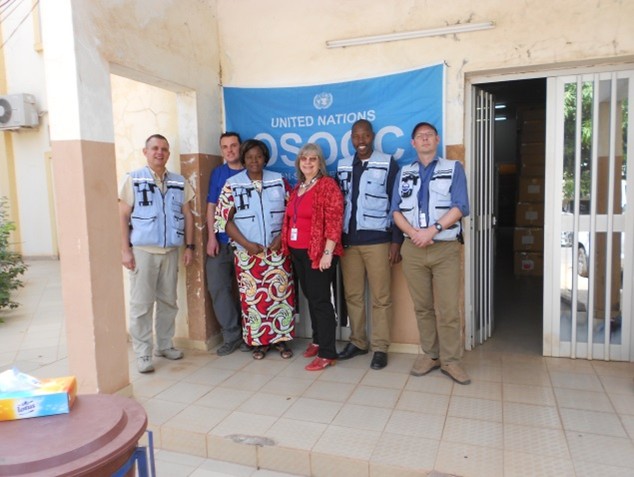
In December 2014, with logistical support from the Belgian rapid response structure B-FAST, the B-LiFE laboratory was deployed to N’zérékoré, in southeastern Guinea. The mission supported an Ebola Treatment Centre operated by the NGO ALIMA, contributing to the international response coordinated by actors such as the European Commission and its Emergency Response Coordination Centre (ERCC). Satellite-based mapping support was also provided through the EU Copernicus Emergency Management Service, enhancing epidemiological tracking and response planning.
At the core of the deployment was the ability to conduct rapid and highly accurate diagnostic testing. The B-LiFE laboratory used DNA-based analysis techniques to detect the Ebola virus in patient samples. Samples were first safely inactivated inside a negative-pressure glove box, ensuring biosafety, before being processed for genetic identification of the virus. Strict infection control procedures were followed at all times, with operating staff using full protective equipment to minimise risk.
A critical enabler of this capability was the real-time communication infrastructure provided by emergency.lu. Luxembourg deployed a rapid deployment kit with an inflatable satellite antenna, ensuring reliable connectivity in an environment with little to no dependable telecommunications infrastructure. The system operated using SES satellite capacity, funded by the Luxembourg government, and allowed for continuous data transmission between the laboratory and external partners.
This connectivity was essential for:
- Transmitting diagnostic results in real time, accelerating decision-making
- Supporting coordination between the laboratory, treatment centre, and international health actors
- Enabling remote analysis, reporting, and integration into broader epidemiological monitoring systems
In addition to diagnostics, the B-LiFE laboratory also contributed to clinical research efforts, including the analysis of experimental therapeutic treatments being administered at the ALIMA centre. This work played a role in advancing knowledge about Ebola and supporting the development of improved treatment approaches.
The deployment demonstrated the importance of integrating advanced medical diagnostics with resilient communications systems in health emergencies. By enabling rapid identification of Ebola cases and ensuring seamless information flow, emergency.lu helped transform a mobile laboratory into a fully connected operational asset within the international response.
This mission stands as a strong example of cross-sector collaboration, where telecommunications, space technology, medical science, and humanitarian logistics converged to address a global public health crisis. It also underscored emergency.lu’s critical role in supporting data-driven response operations, where speed, accuracy, and connectivity are vital to saving lives and containing outbreaks.