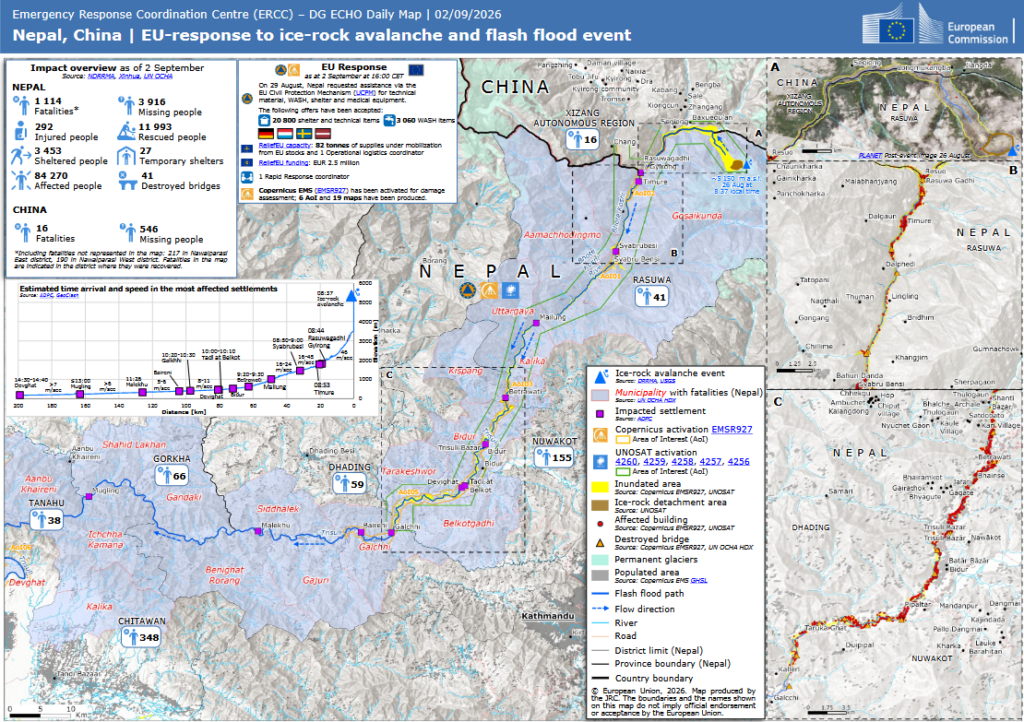
On 26 August 2026, Nepal experienced one of the most devastating mountain disasters in its recent history when a suspected ice and rock avalanche in the Himalayan border region triggered a catastrophic flash flood along the Bhote Koshi and Trishuli river systems. The event affected the districts of Rasuwa, Nuwakot and Dhading, including the important Rasuwagadhi border crossing with China. Initial assessments indicate that the disaster may have been caused by an upstream ice avalanche, glacier collapse, river damming or a glacial lake outburst flood, generating a sudden surge of water and debris that swept through valleys and settlements downstream.
As of 5 September 2026, at least 1 342 people had been confirmed dead, while a further 4 886 people were reported missing, including large numbers of tourists and trekkers. Roads, schools, health facilities, markets, houses, police posts and telecommunications infrastructure suffered significant damage. The Government of Nepal estimated that approximately 10 000 households required immediate humanitarian assistance.
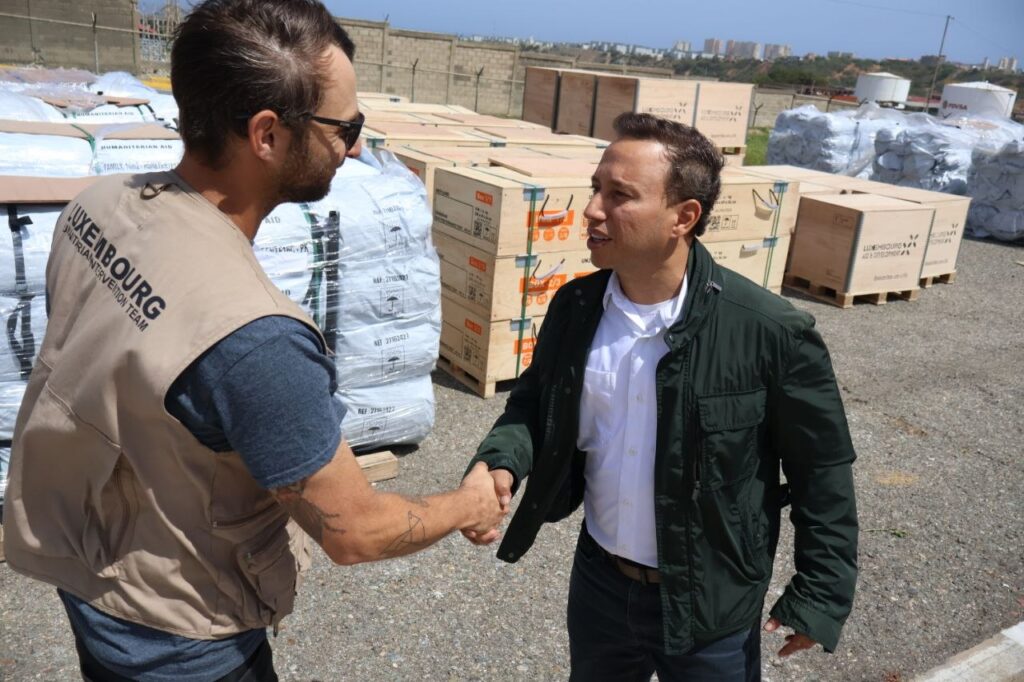
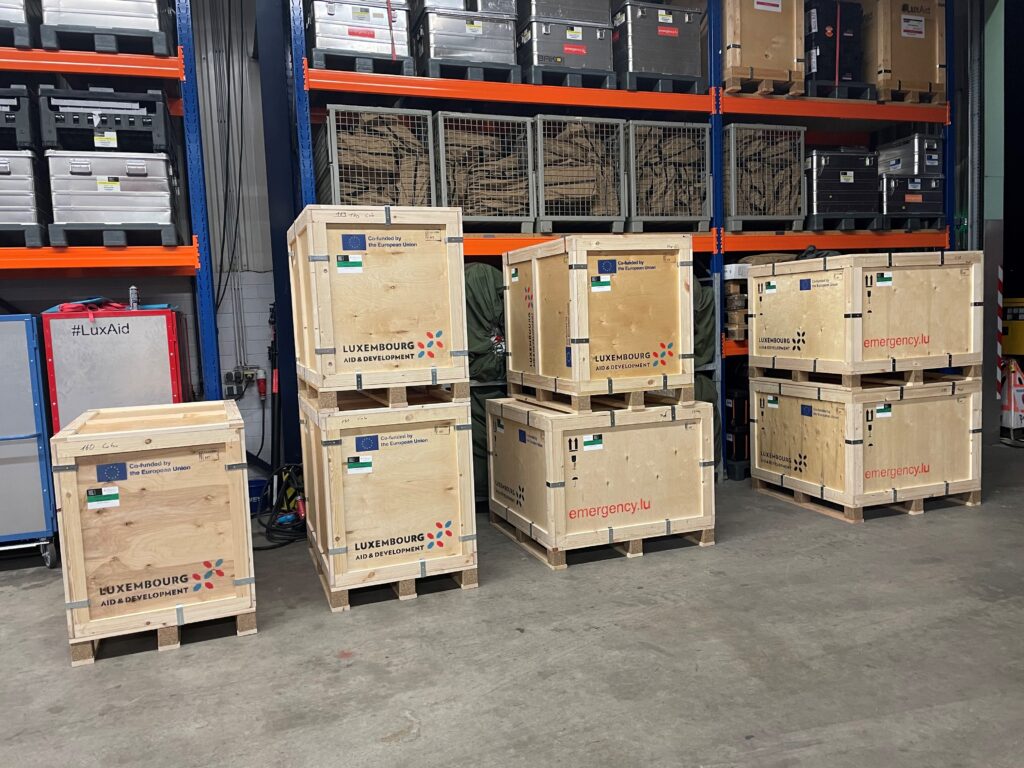
In response to a request for international assistance through the European Union Civil Protection Mechanism (UCPM), Luxembourg rapidly mobilized support from the emergency.lu humanitarian stockpile. Luxembourg was among the first European countries to answer the request for assistance and to commit relief items for the affected population.
The emergency.lu stockpile deployment consisted of:
- 1 000 tarpaulins to support emergency shelter needs for families whose homes were damaged or destroyed by the floods and debris flows; and
- 560 body bags to support the dignified management of the deceased and assist local authorities and humanitarian actors involved in recovery efforts.
The dispatched relief items addressed two of the most urgent humanitarian needs identified during the first days of the response: emergency shelter for displaced households and support to disaster victim management.