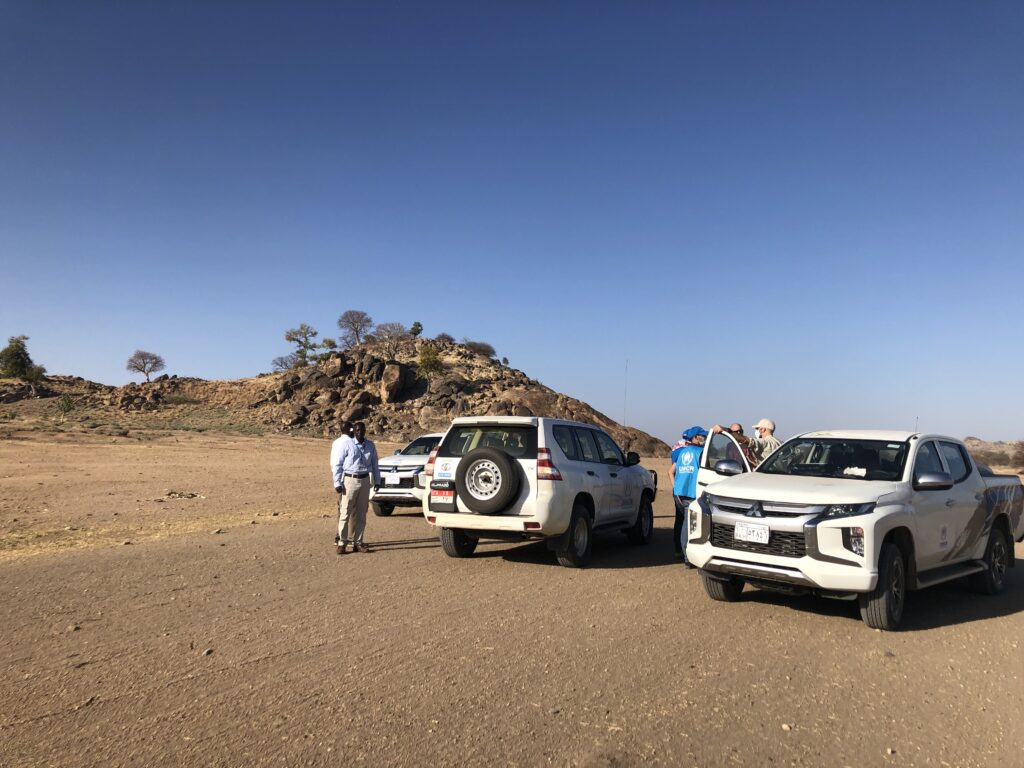
In the Sahel region, and particularly in Diffa, Niger, long‑standing challenges such as insecurity, climate shocks, and chronic poverty are compounded by a severe digital divide. Internet access remains extremely limited—only around 5% of the population in Niger is connected—while access to electricity in rural areas is equally scarce. These constraints isolate communities from essential information, services, and opportunities, reinforcing vulnerability and limiting resilience.
Against this backdrop, and building on earlier connectivity efforts in Diffa, the Emergency Telecommunications Cluster (ETC)—with support from the Government of Luxembourg—launched an initiative in 2023 aimed at extending digital services directly to affected communities, rather than only to humanitarian actors.
Read more about the ETC’s Services for Communities (S4C) program here.
The project introduced a set of community‑focused ICT services, designed to bridge the information gap and empower local populations. These included:
- Charging stations, enabling access to electricity for phones and small devices
- Phone booths, allowing communication in areas without coverage or personal devices
- Cybercafés, providing public access to computers and digital tools
- Wi‑Fi hotspots, offering shared internet connectivity
These facilities were deployed in accessible locations, allowing communities—including displaced populations and host communities—to connect with the outside world, access information, and stay in touch with family members.
Beyond connectivity, the initiative integrated a strong digital learning component, helping users develop essential digital skills. This included basic training on internet use, communication tools, and access to online services, enabling people to better leverage connectivity for:
- Education and self‑learning
- Access to humanitarian information and services
- Livelihood opportunities and economic activities
By shifting the focus from infrastructure alone to people-centered services, the programme contributed to:
- Reducing information inequality
- Strengthening community resilience to shocks and crises
- Supporting social and economic inclusion in fragile environments
The Diffa 2023 initiative marked an important evolution in emergency.lu’s approach—demonstrating that connectivity is not only a tool for humanitarian coordination, but also a direct enabler of empowerment for affected populations.
In a region where isolation can deepen vulnerability, these services helped communities reconnect, learn, and adapt, strengthening their ability to cope with ongoing challenges and build a more resilient future.