In 2017, the Diffa region of Niger stood at the centre of a growing humanitarian crisis driven by the ongoing Boko Haram insurgency in north-eastern Nigeria. Persistent violence, including attacks, forced recruitment, and suicide bombings, forced tens of thousands of people to flee across borders or within the region. By this time, over 106,000 Nigerian refugees and more than 127,000 internally displaced persons had settled in Diffa, nearly doubling the local population and placing immense strain on already scarce resources.
The region itself presented severe operational challenges. Remote, arid, and located a two-day drive from the capital Niamey, Diffa suffered from chronic poverty, weak infrastructure, limited access to basic services, and recurrent security incidents. Among the many constraints faced by humanitarian actors, lack of reliable connectivity was a critical obstacle. Internet access was often slow at best, and in many locations completely unavailable, significantly hampering coordination, programme implementation, and response effectiveness.
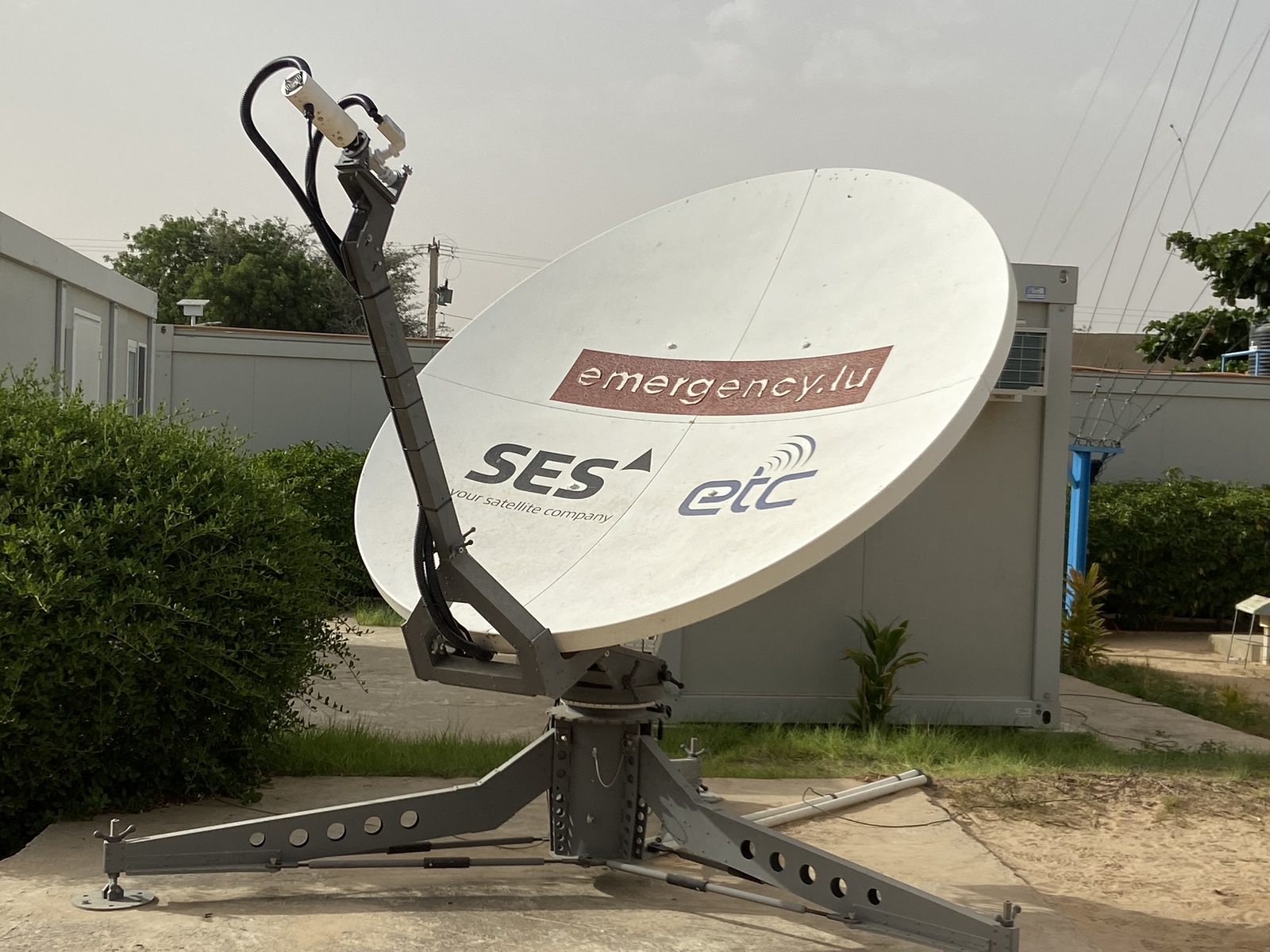
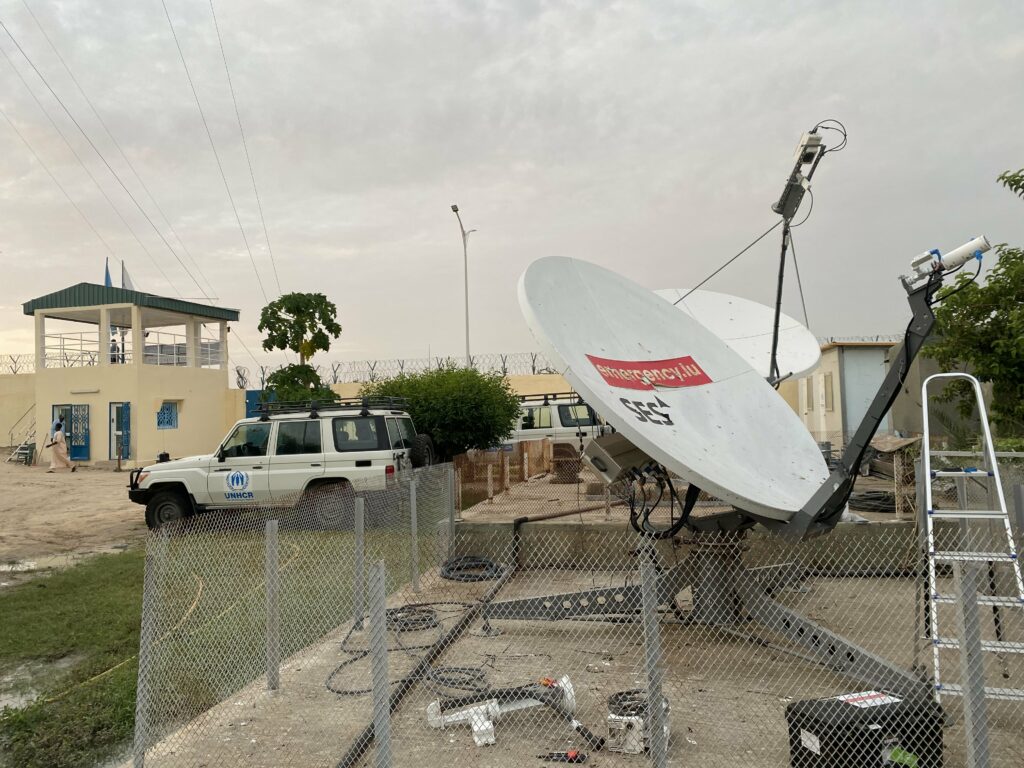
To address these challenges, the Refugee Emergency Telecommunications Sector (RETS), led by UNHCR, deployed telecommunications support as part of the broader refugee response. At the request of UNHCR, the Government of Luxembourg contributed by deploying an emergency.lu satellite connectivity system to Diffa.
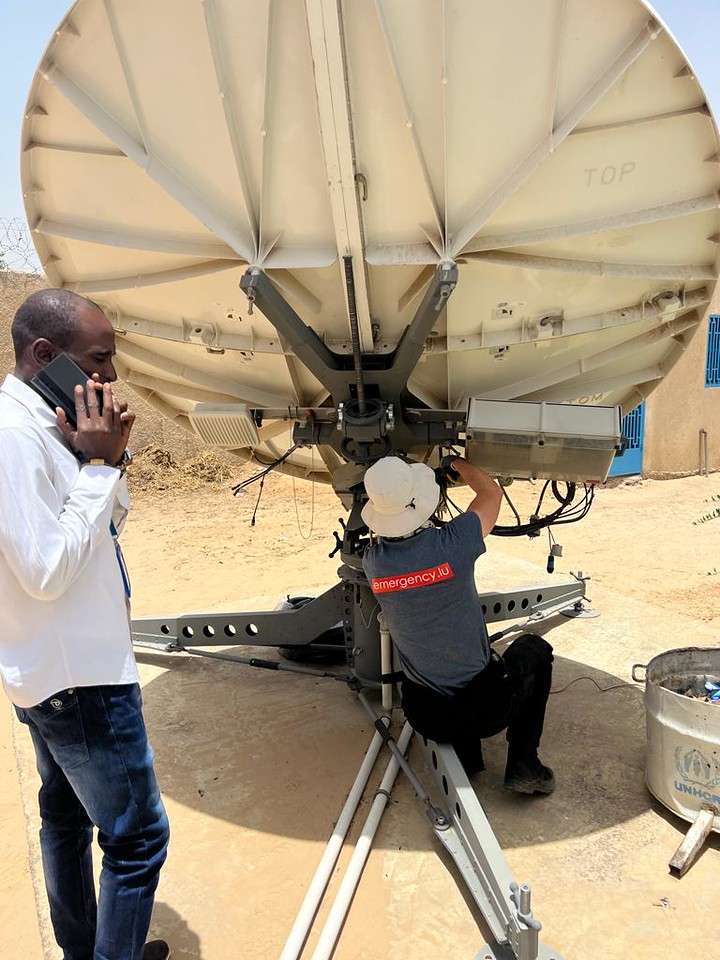
The system was installed at the UNHCR office in Diffa and extended beyond a single site through innovative field integration. Using long-distance wireless links, connectivity was shared with multiple partner organisations, including Action Pour Le Bien Être (APBE), Karkara, and Secours des Oubliés (SDO), as well as to more remote locations such as Sayam Forage refugee camp, located approximately 36 kilometres away. This required the deployment and precise alignment of long-range microwave antennas to bridge the distance and create a stable communication link.
The deployment marked a significant step forward as the first emergency.lu operation specifically designed to provide connectivity directly to partners through a shared network model. This approach extended the benefits of reliable communications beyond UNHCR itself to the wider humanitarian ecosystem operating in Diffa.
Connectivity also had a tangible impact on specific programmes. For example, it supported education initiatives for refugee children, including efforts to maintain access to the Nigerian curriculum and facilitate examination processes through distance learning solutions. It also improved the ability of humanitarian actors to respond to security incidents in a region affected by ongoing attacks.
Approximately 30 partner staff directly benefited from the services, which were provided free of charge by Luxembourg for an initial six-month period. The success of the deployment led to plans for further expansion, including extending connectivity to government counterparts working alongside UNHCR.
The Diffa operation demonstrated how connectivity can fundamentally transform humanitarian response capacity in remote and insecure environments. By bridging physical and operational gaps, emergency.lu enabled a more integrated, efficient, and responsive approach to assisting displaced populations.
As one UNHCR official noted, connectivity did more than improve communication—it changed the way humanitarian actors operate, strengthening collaboration, enhancing protection, and ultimately improving the quality of assistance delivered to some of the region’s most vulnerable people.