In the aftermath of the powerful double earthquake that struck Venezuela on 24 June 2026, severe damage to infrastructure and telecommunications networks left many affected communities isolated from essential services and information. As international relief efforts scaled up, restoring reliable communications quickly became a critical operational priority.
On 25 June, Luxembourg received a request for assistance through the European Union Civil Protection Mechanism (UCPM) to provide emergency connectivity support in the affected area. The following day, two emergency.lu experts departed Luxembourg aboard a Luxembourg Air Rescue aircraft bound for Venezuela. The deployment was activated through the European Civil Protection Pool (ECPP), and the team arrived in Caracas on 28 June before moving into the affected coastal region of La Guaira.
Upon arrival, the team established its operational base at La Guaira Stadium, where international response teams had set up their coordination and accommodation facilities. Together with humanitarian partners, the experts conducted a series of assessments to identify the location where communications support would have the greatest impact.
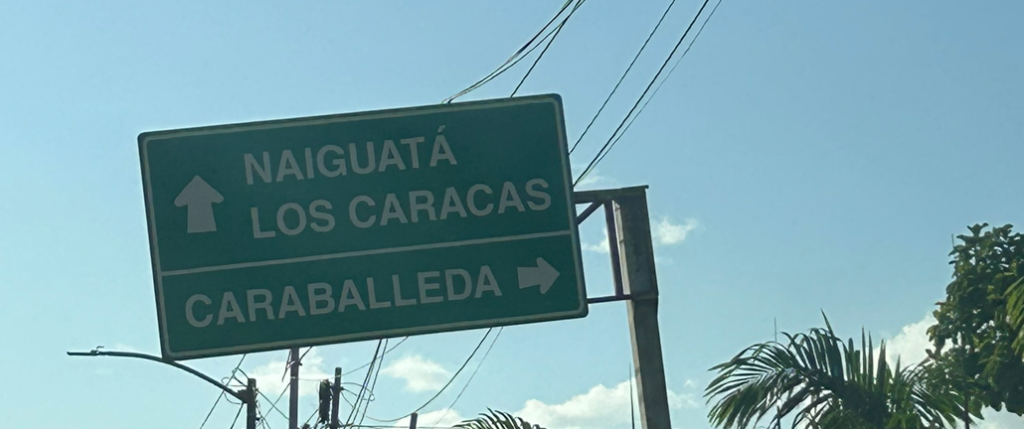
Following these assessments, the coastal community of Caraballeda was selected for the deployment of an emergency.lu satellite communications module. The chosen site was an IVSS mobile clinic serving both disaster-affected residents and displaced families. The IVSS (Instituto Venezolano de los Seguros Sociales) is Venezuela’s national social security institution and operates a network of healthcare facilities throughout the country, providing medical services to insured citizens, pensioners and vulnerable populations.
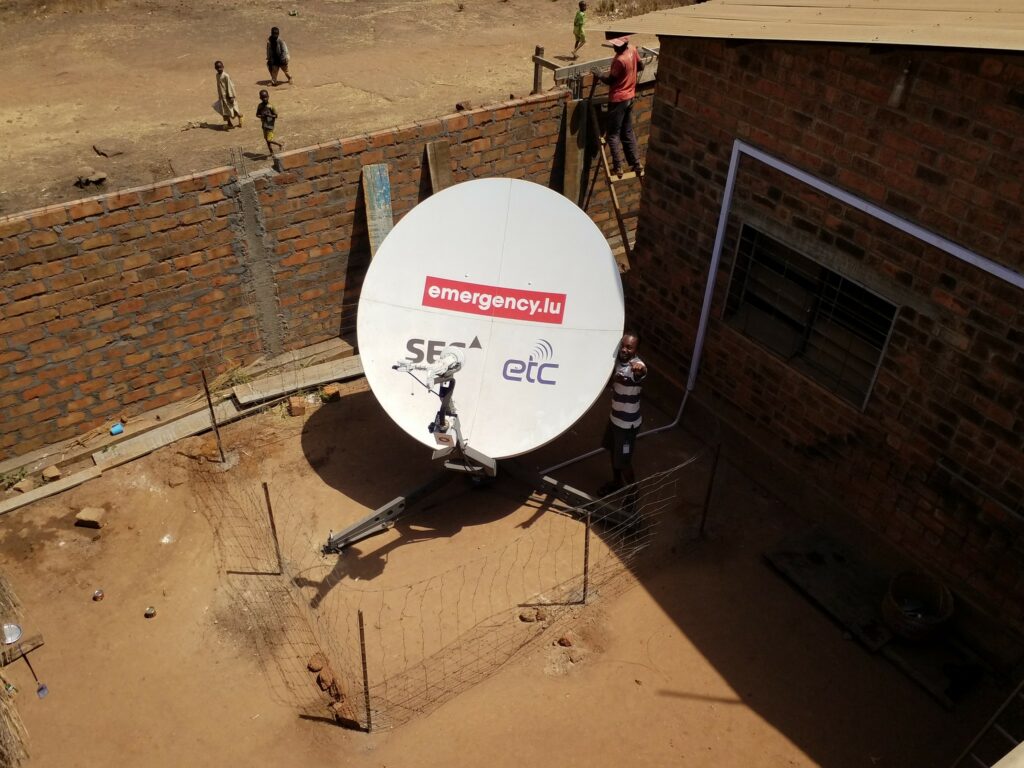
The emergency.lu team installed its antenna system on the roof of the mobile clinic. Prior to the deployment, the area surrounding the facility had no internet connectivity, significantly hampering relief operations and limiting residents’ ability to communicate with relatives and access vital information. To address these challenges, the team deployed a Ku-Rapid satellite communications system together with a fully redundant power supply architecture, ensuring continuous service even under demanding field conditions. Installation activities continued throughout the night to bring connectivity online as quickly as possible.
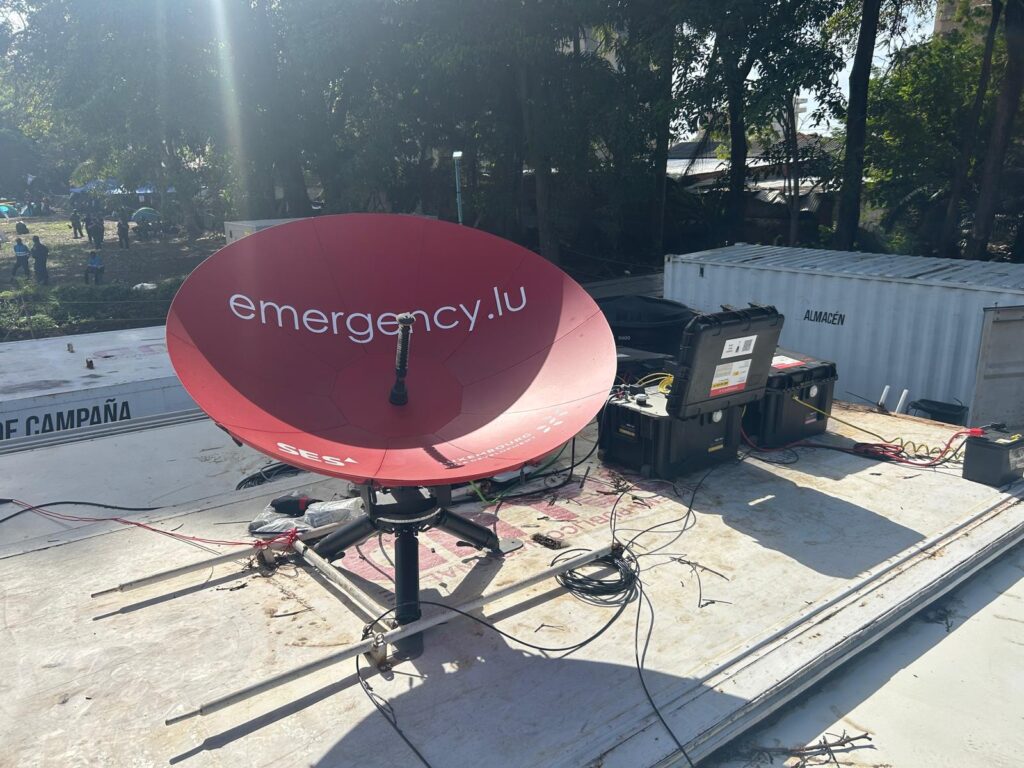
Once operational, the system immediately became a critical communications hub for both the healthcare sector and the wider humanitarian community. Clinic staff gained the ability to coordinate directly with hospitals and medical specialists elsewhere in the country, transmit diagnostic imagery including X-rays for remote consultation, and exchange operational information in real time. The system also supported several international response organisations operating in the area, including Italian and Mexican medical teams, UNICEF, and other humanitarian partners.
For the families temporarily sheltered around the clinic, the connection provided a vital link to the outside world. Many were able to contact relatives for the first time since the earthquake and reconnect with family members elsewhere in Venezuela and abroad.
As part of its planned transition strategy, the team initially explored the possibility of extending connectivity through a long-range radio-wave link using Picacho de Galipán as a relay site. However, logistical constraints, including road access restrictions and delays in obtaining overflight permissions, prevented the implementation of this solution.
During the course of the mission, a more sustainable alternative emerged. Technical assessments identified a functional fibre-optic terminal at Estadio Forum in La Guaira. This discovery led to closer collaboration with local stakeholders, including the Comisión Nacional de Telecomunicaciones (CONATEL), G-Network, the World Food Programme (WFP), and the Logistics and Telecommunications Cluster (LTC).
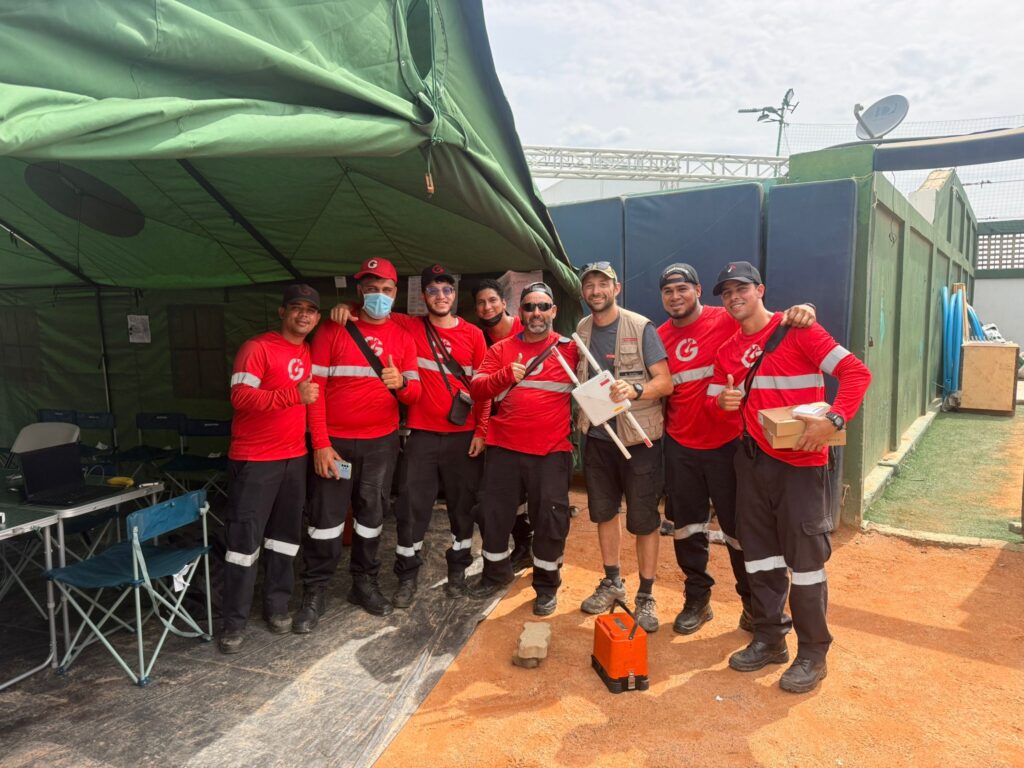
A key coordination meeting held on 9 July resulted in the decision to transition from the temporary satellite-based solution to a fibre-based Wi-Fi network. By 12 July, connectivity services had been established in both Caraballeda and Estadio César Nieves, delivering high-speed internet access to humanitarian responders and affected communities. The new network represented not only a restoration of communications but also the creation of a scalable and durable infrastructure capable of supporting longer-term recovery efforts.
On 13 July, the installed equipment and associated network infrastructure were formally handed over to the World Food Programme, ensuring operational continuity after the departure of the emergency.lu team. The Luxembourg Telecommunications Module completed its mission and departed Venezuela on 14 July 2026.
The operation successfully achieved its primary objective of restoring connectivity where none existed, enabling humanitarian actors to coordinate relief activities and provide assistance more effectively. Beyond the immediate emergency response, the mission demonstrated the value of strong cooperation between government authorities, private telecommunications providers and humanitarian organisations. The partnership between CONATEL, G-Network, WFP, LTC and the Luxembourg Telecommunications Module created a model for future emergency deployments and contributed to the extension of terrestrial connectivity to transit centres in the affected region.
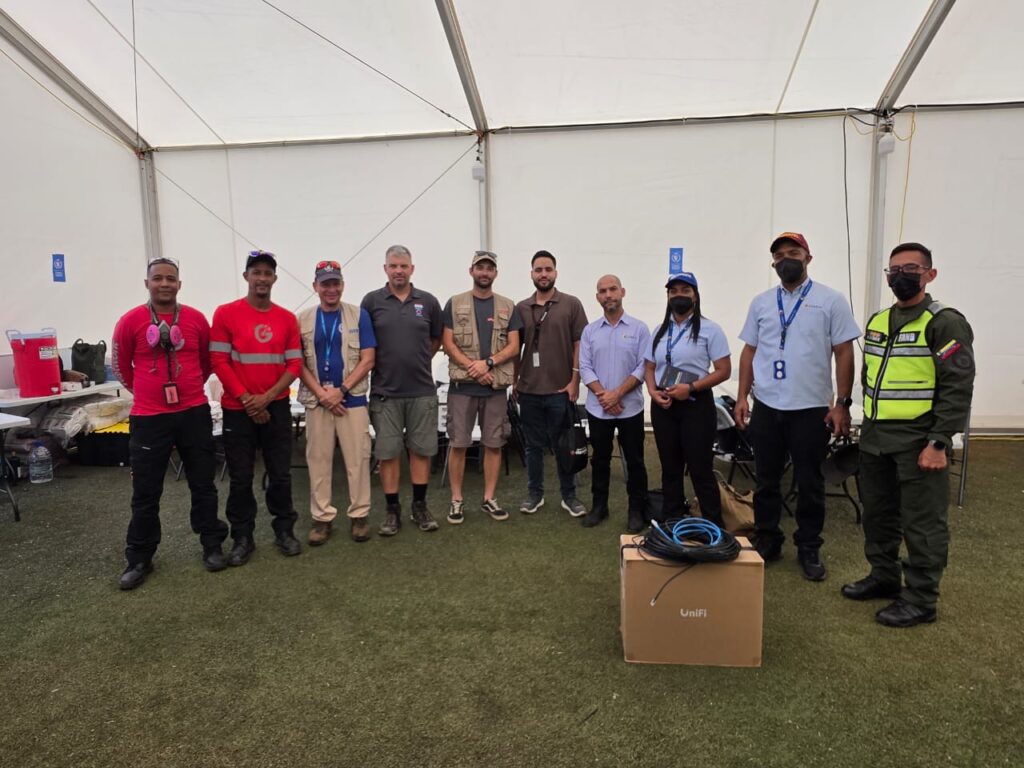
The mission’s lasting legacy lies not only in the communications services provided during the response phase, but also in the sustainable infrastructure and collaborative framework established for the benefit of humanitarian workers and earthquake-affected communities long after the emergency.lu team’s departure.