In 2022, the town of Dori, located in Burkina Faso’s Sahel region, was at the centre of a rapidly worsening humanitarian crisis. Escalating armed violence, large‑scale displacement, and worsening food insecurity—driven by climate pressures and instability—forced thousands of people to flee surrounding areas and seek refuge in the city. Public services were overstretched, infrastructure was fragile, and access to electricity and telecommunications remained extremely limited.
In this environment, the lack of connectivity became a critical barrier. Communities—both displaced and host populations—were cut off from essential information, services, and communication channels. Humanitarian actors also faced challenges in delivering coordinated assistance, while opportunities for education, livelihoods, and access to digital tools remained largely out of reach.
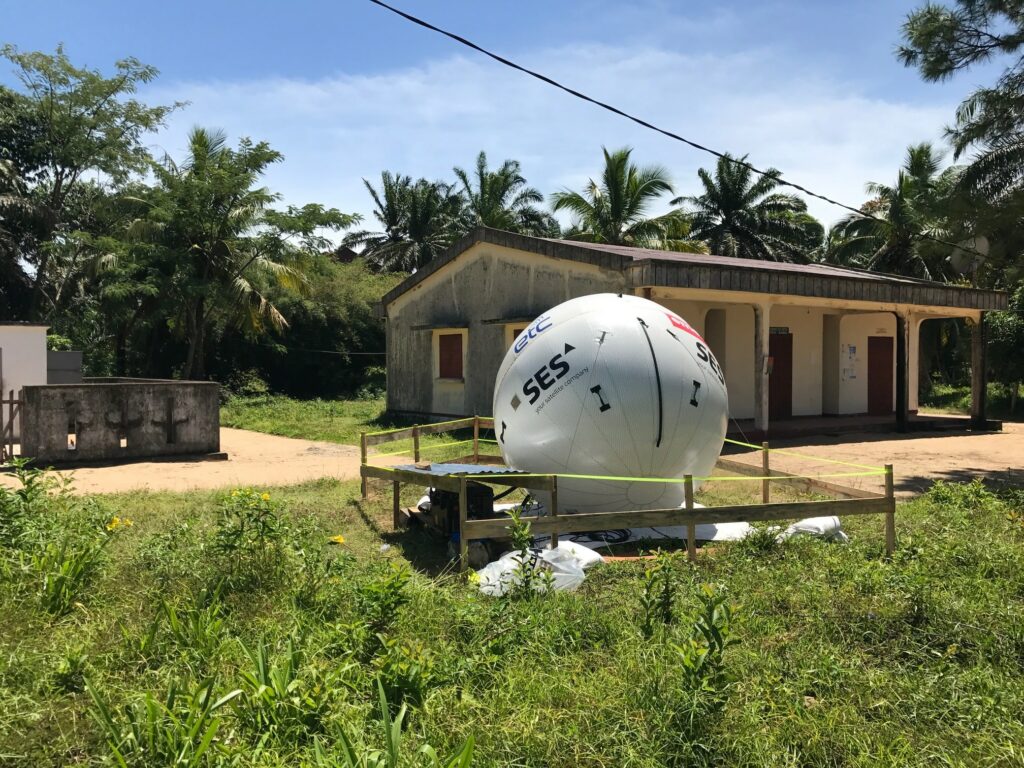
To respond to these needs, the Emergency Telecommunications Cluster (ETC), supported by the Government of Luxembourg, established a community Information, Communication and Training Centre in Dori, following the model successfully implemented in Diffa and Tahoua. The centre provided free internet access, digital services, and training opportunities, creating a safe and inclusive space for communities to connect and engage.
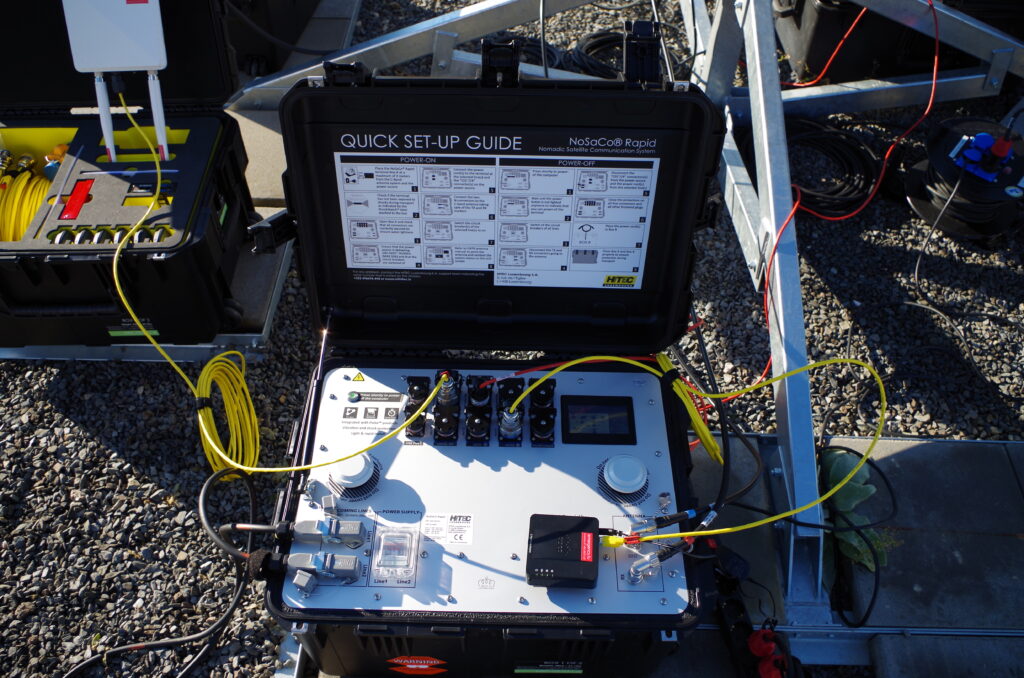
A key component of the Dori deployment was the integration of advanced SD‑WAN (Software‑Defined Wide Area Network) technology, enabled by emergency.lu. This added a smart layer to the satellite connectivity, allowing:
- Intelligent traffic steering, prioritising critical services and applications
- Implementation of content access policies, ensuring safe and appropriate use
- Efficient bandwidth management, optimising limited resources for multiple users
- Improved network stability and performance in a constrained environment
The centre offered a range of services to the community, including:
- Public Wi‑Fi hotspots and shared internet access
- Charging stations for mobile devices
- Digital training and learning programmes
- A platform for community interaction and information sharing
These services enabled communities to:
- Access life‑saving and humanitarian information
- Communicate with family and support networks
- Develop digital skills for education and livelihoods
- Strengthen their resilience to ongoing crises
In early 2026, as local infrastructure gradually improved, the centre was successfully connected to a local internet service provider (ISP). As a result, the satellite link provided by Luxembourg was no longer required, marking a successful transition from emergency connectivity to sustainable local solutions.
The Dori operation demonstrates the full lifecycle of emergency.lu support: from rapid deployment and advanced connectivity solutions, to capacity building and eventual handover once local systems are restored.