The Emergency Telecommunications Cluster (ETC) has officially published the final report of the ETC Sahel Project (2021–2026), marking the conclusion of a major multi-country initiative that has significantly advanced digital inclusion and connectivity for crisis-affected communities across the Sahel.
emergency.lu warmly congratulates the ETC and all partners involved in this impactful project. We are proud to have been closely engaged throughout its implementation, contributing both technically and operationally to its success.
Read the full report here.
Bridging the Digital Divide in the Sahel
Across the Sahel region—where limited infrastructure, low internet penetration, and restricted access to electricity continue to isolate communities—the project addressed critical information and communication gaps. With tailored ICT services, the ETC enabled affected populations to access life-saving information, connect with the world, and build essential digital skills.
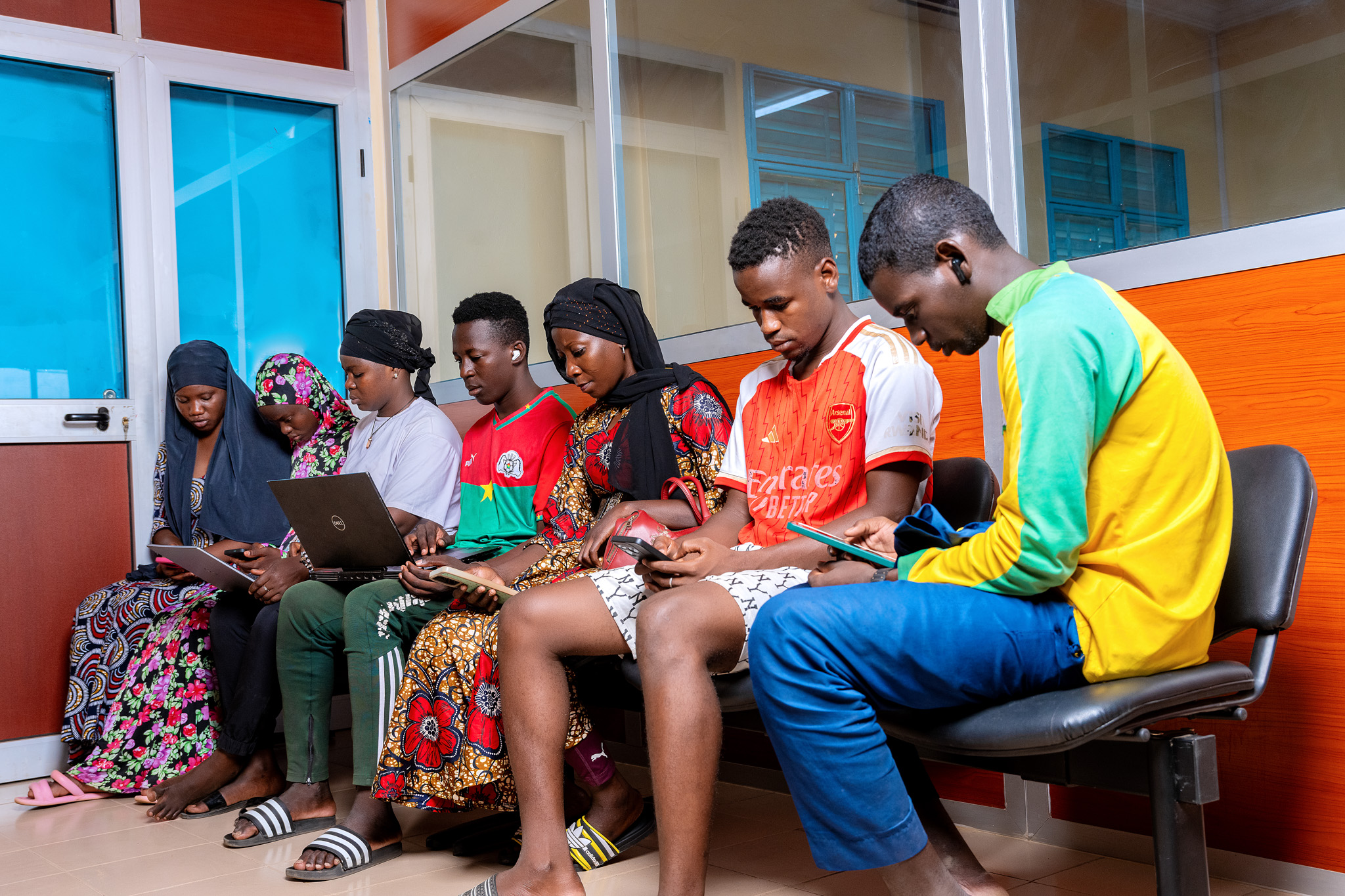
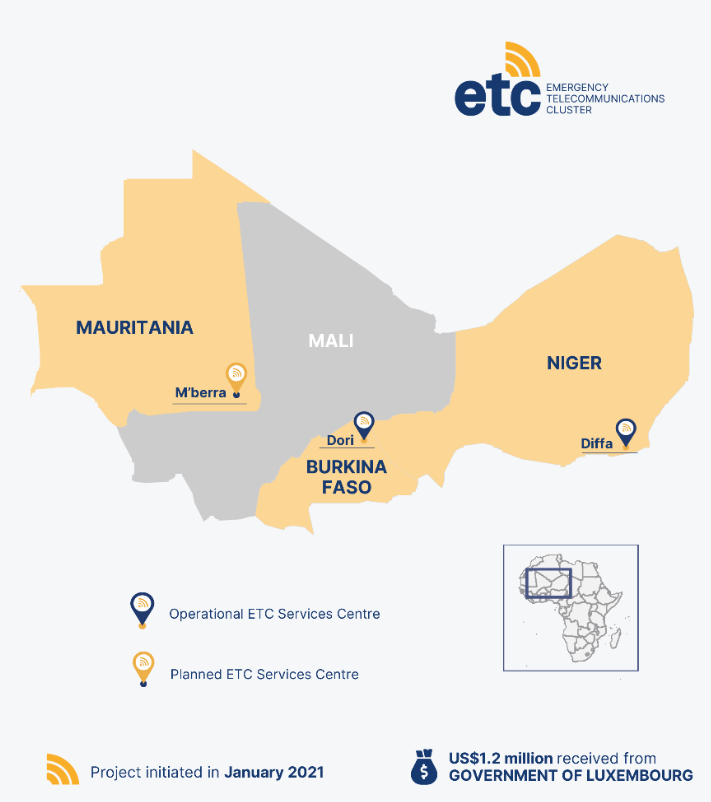
Since 2021, the project has been implemented in Niger, Burkina Faso, and Mauritania, establishing ETC Services Centres that provide connectivity through cybercafés, Wi‑Fi hotspots, phone booths, charging stations, and digital learning opportunities.
These centres have not only improved access to information and communication tools but have also contributed to strengthening resilience, supporting livelihoods, and fostering digital inclusion in some of the most challenging humanitarian contexts.
A Strong Partnership with the Government of Luxembourg
The success of the ETC Sahel Project was made possible through the strong and long-standing partnership with the Government of Luxembourg.
With a generous contribution of USD 1.2 million, Luxembourg supported the establishment and expansion of ETC Services Centres, the deployment of technical infrastructure, and the development of operational models that will guide future connectivity initiatives.
Beyond financial support, Luxembourg played a key strategic and technical role throughout the project. Contributions included:
- Technical exchange and expertise
- Support to solution architecture and service design
- Deployment of SD-WAN networking capabilities
- Provision of connectivity equipment and test platforms
- Remote technical support and troubleshooting
These contributions significantly strengthened implementation quality and helped shape a scalable model for community connectivity.
For emergency.lu, this collaboration reflects our continued commitment to leveraging Luxembourg’s expertise and innovation to support humanitarian action worldwide.
A Model Built for Sustainability
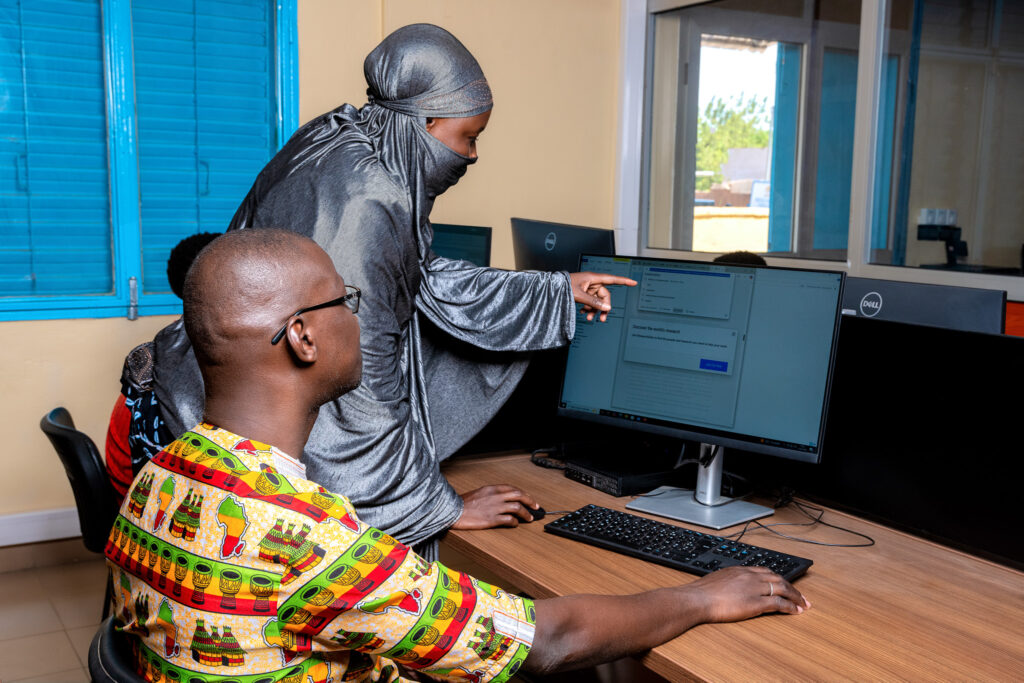
One of the most important achievements of the ETC Sahel Project is the development of a sustainable and locally anchored service delivery model.
The project clearly demonstrated that sustainability cannot be an afterthought—it must be integrated from the outset. Early engagement with local authorities and partners, combined with shared responsibility for operations, proved essential to ensuring continuity.
Key lessons include:
- Sustainability depends on early planning and local involvement
- Local partners taking on management roles strengthens long-term continuity
- Shared ownership makes services more realistic and sustainable over time
By progressively handing over operations to local actors—such as municipalities, NGOs, and national institutions—the project ensured that the ETC Services Centres are embedded within local ecosystems rather than functioning as stand-alone interventions.
emergency.lu is particularly proud that this approach emphasizes empowering local communities and governments, laying the foundation for durable, self-sustaining connectivity solutions.
From Field Experience to Global Standards
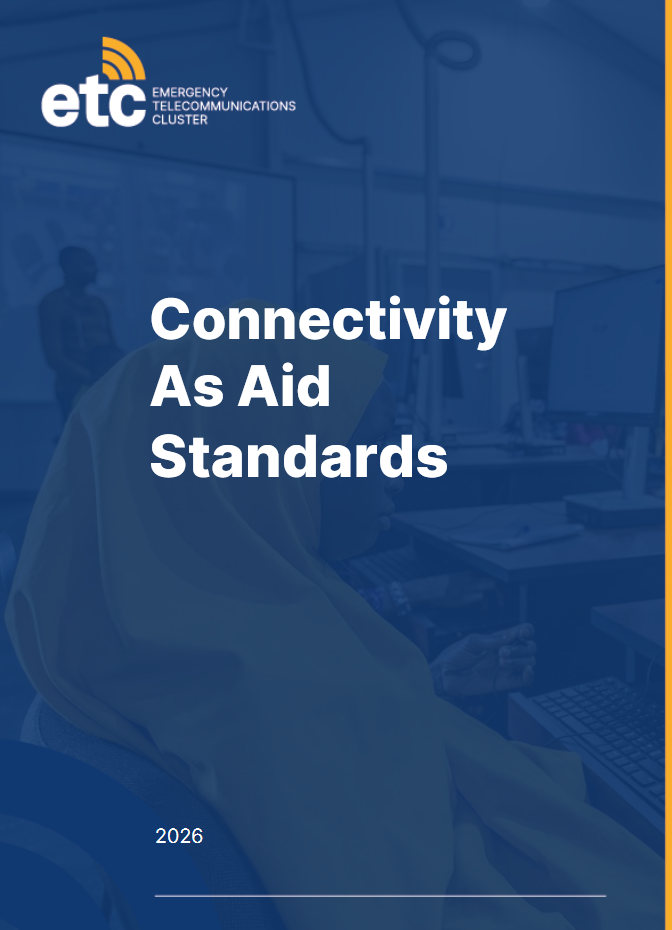
Another major outcome of the project is its direct contribution to the development of the Connectivity as Aid (CAA) Standards, a global framework for delivering connectivity in humanitarian settings.
Grounded in real-world operational experience from the Sahel, the CAA Standards provide people-centred, principled guidance to ensure connectivity services are safe, inclusive, and effective.
The Standards define 13 key areas covering the full programme cycle—from needs assessment and community participation to sustainability, protection, and accountability.
They recognize connectivity as a critical enabler of:
- Access to life-saving information
- Communication with family and support networks
- Access to education, services, and humanitarian assistance
- Dignity, protection, and informed decision-making in crisis contexts
The technical and financial support provided by Luxembourg played an important role in making this global framework possible—transforming field experience into practical standards that will shape future humanitarian connectivity interventions worldwide.
Looking Ahead
The ETC Sahel Project stands as a strong example of how partnership, innovation, and local engagement can deliver meaningful impact in complex humanitarian environments.
By combining operational implementation with strategic vision, the project has:
- Bridged critical connectivity gaps
- Strengthened resilience and digital inclusion
- Established a scalable and replicable service model
- Contributed to global standards for humanitarian connectivity
At emergency.lu, we are proud to have contributed to this journey and to support initiatives that place communities at the centre, promote sustainability, and harness technology for humanitarian impact.
We congratulate the ETC on this remarkable achievement and look forward to continuing our collaboration in advancing connectivity as a vital humanitarian service.