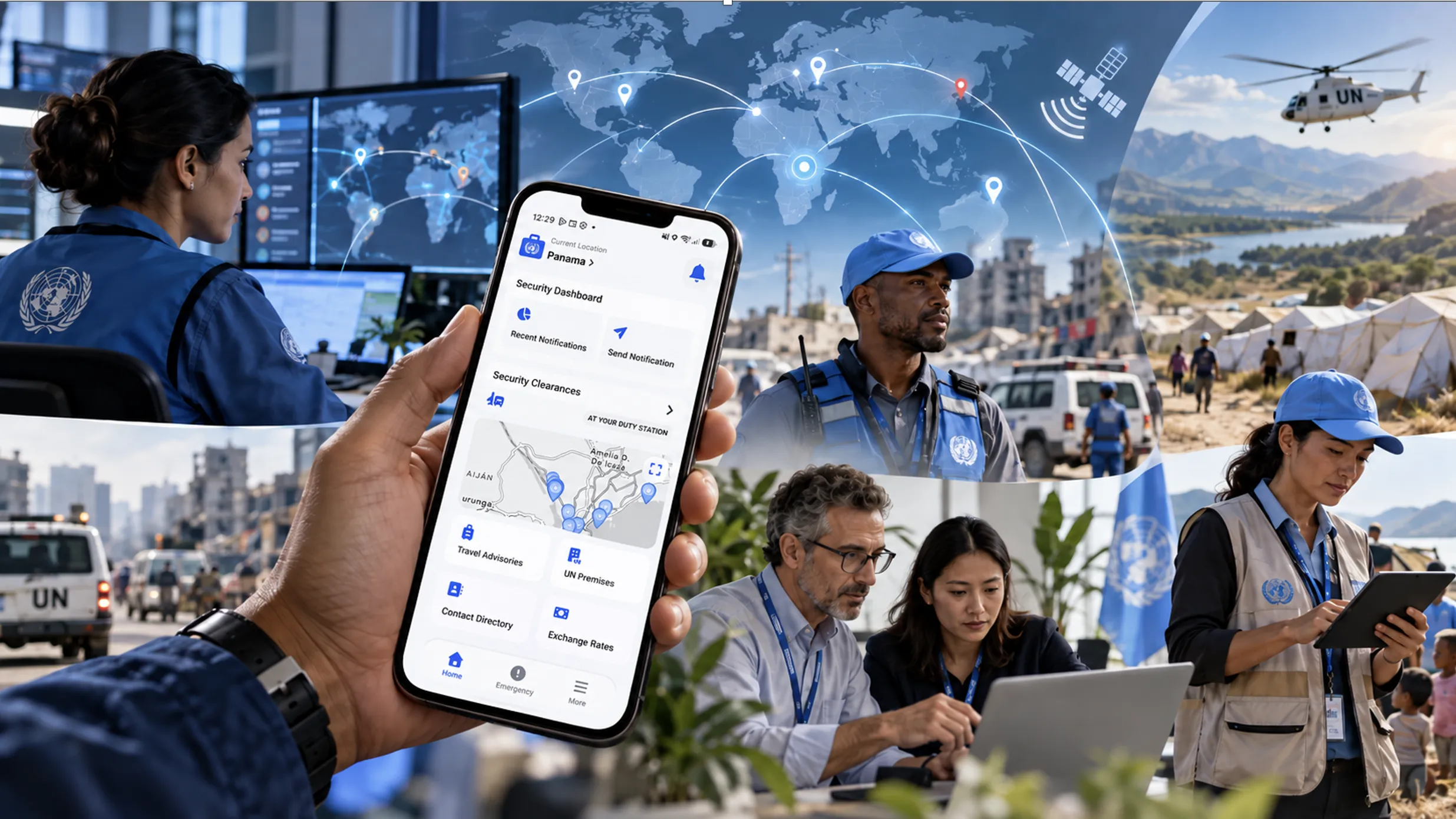
When a crisis unfolds, humanitarian organizations need more than communication. They need to know where their personnel are, whether they are safe, and how rapidly evolving events may affect their operations. Turning that need into a practical and reliable capability is the challenge that gave rise to the Electronic Travel Advisory (eTA) platform.
Developed by the United Nations Department of Safety and Security (UNDSS) with the support of the Government of Luxembourg and HITEC Luxembourg, eTA has evolved into a global platform that helps keep United Nations personnel connected, informed and accountable during emergencies. Today, the system supports more than 150,000 users across approximately 200 locations worldwide and plays a critical role in emergency communications, personnel accountability, location services, movement monitoring and situational awareness.
The platform’s origins lie in a simple operational requirement: enabling organizations to rapidly account for personnel during emergencies while providing decision-makers with timely information. Over time, eTA has expanded into a comprehensive operational tool that supports security teams and humanitarian actors before, during and after crises. As highlighted in the video below, its value extends beyond technology itself. By helping personnel remain connected and security teams maintain visibility, eTA contributes directly to operational continuity in challenging environments.
Its impact has already been demonstrated in some of the world’s most complex humanitarian and security contexts. In Ukraine and Sudan, eTA supported the accountability and safe evacuation of United Nations personnel during periods of conflict. In Haiti, geolocation capabilities helped security teams manage complex incidents, while in Cuba, the platform strengthened preparedness and situational awareness ahead of emergencies.
For emergency.lu, eTA represents an important example of how innovation can successfully move from concept to operations. Effective innovation is not measured by the sophistication of the technology alone, but by its ability to solve real-world challenges and deliver value where it matters most. The success of eTA demonstrates the importance of sustained partnerships, long-term investment and close collaboration between governments, technology providers and operational humanitarian actors.
By supporting initiatives such as eTA, Luxembourg continues to help shape practical digital solutions that strengthen humanitarian operations worldwide, enabling organizations to work more safely, respond more effectively and remain focused on delivering assistance to people in need.