On 14 March 2019, Cyclone Idai made landfall near Beira, Mozambique, bringing winds of up to 185 km/h and torrential rainfall exceeding 150 mm in 24 hours. The cyclone caused catastrophic flooding and destruction, with around 90% of Beira damaged or destroyed and more than 600,000 people affected. Entire communities were cut off, infrastructure collapsed, and telecommunications networks were severely disrupted at a time when coordination and information flow were most critical.
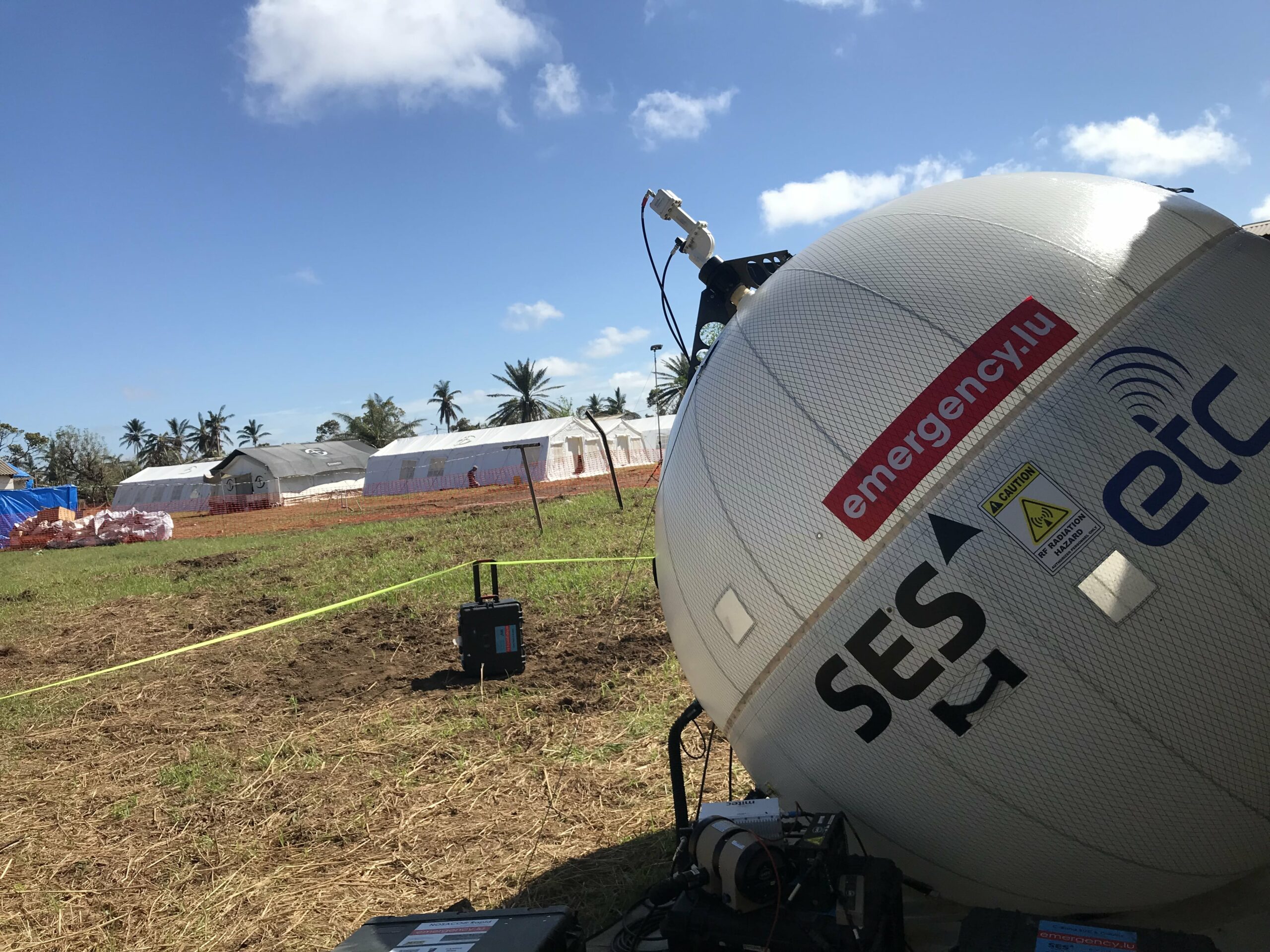
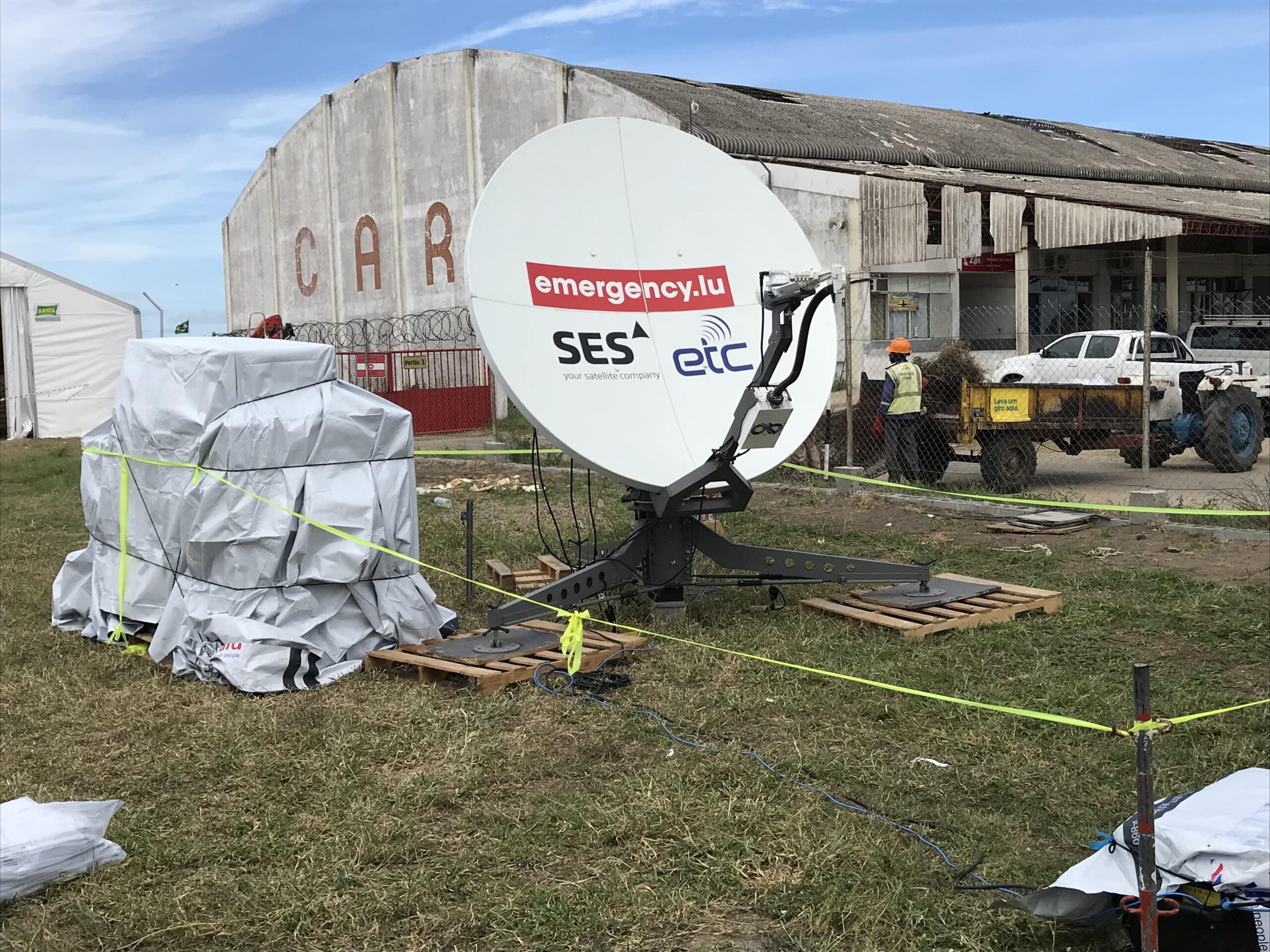
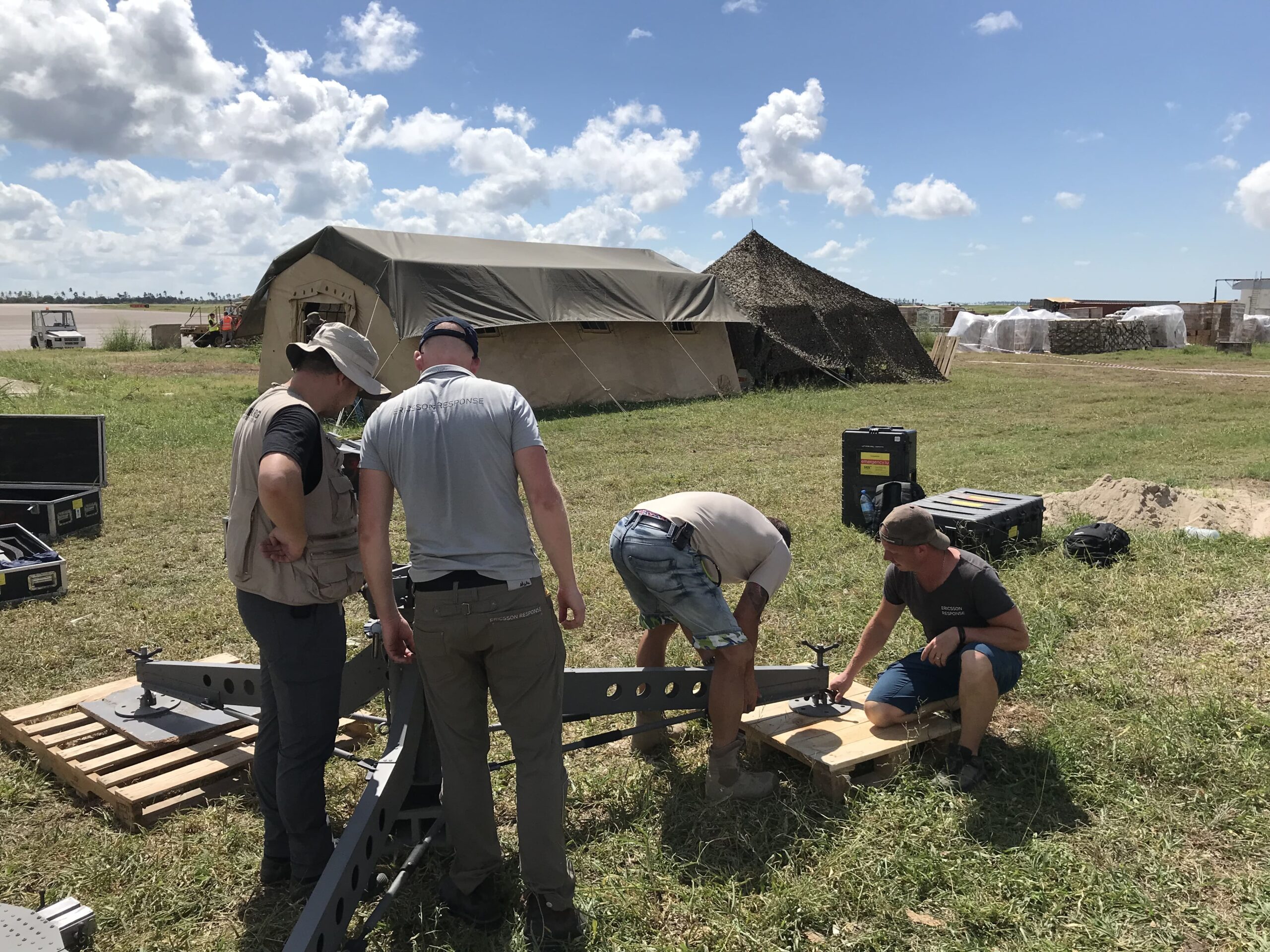
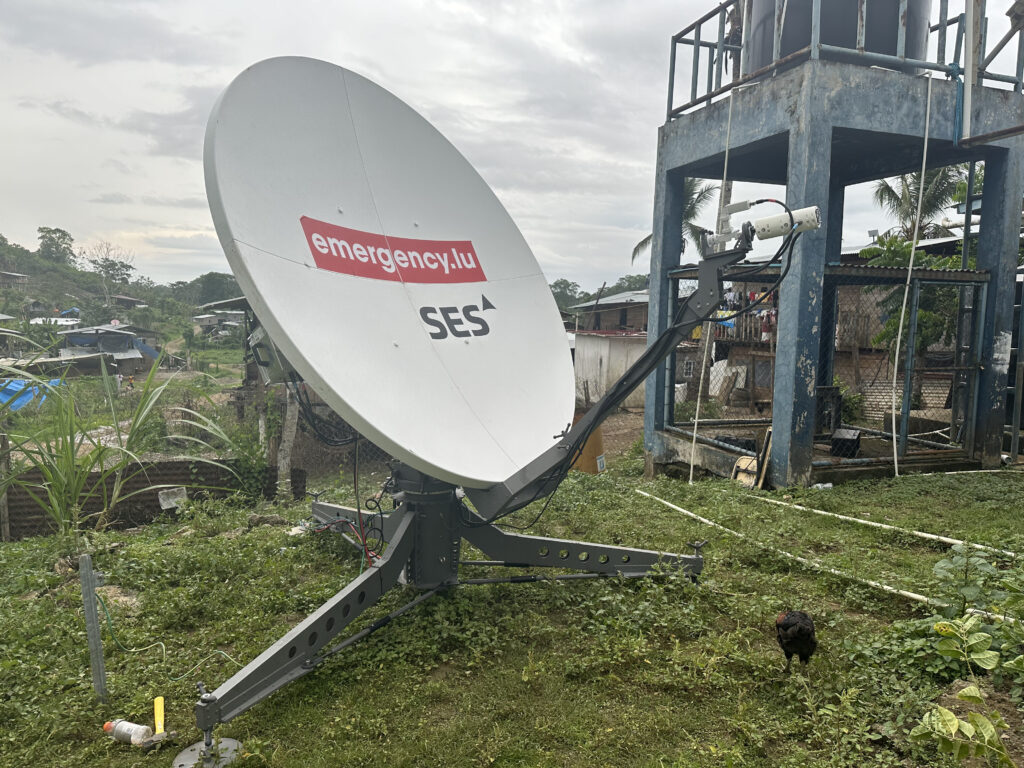
In response to an official request from the World Food Programme (WFP), acting as global lead of the Emergency Telecommunications Cluster (ETC), and through the European Civil Protection Mechanism (EUCPM), the Government of Luxembourg rapidly activated emergency.lu. Within 24 hours, a first team of HIT (Humanitarian Intervention Team) experts was mobilised and deployed, carrying Rapid Deployment Kits using inflatable GATR VSAT antennas. The team departed Europe on 16 March and arrived in Beira on 17 March, immediately initiating installation at the airport Emergency Operations Centre (EOC) in close coordination with WFP ICT teams.
In total, five Luxembourg Civil Protection (CGDIS) experts were deployed to Mozambique. Over the course of the mission, they installed five emergency.lu satellite terminals across critical locations, including Beira, Buzi, and Pemba—the latter also supporting response efforts following Cyclone Kenneth, which struck northern Mozambique weeks later.
The deployed systems provided reliable, high-capacity satellite connectivity to a wide range of humanitarian actors, including WFP, OCHA, UNICEF, WHO, IOM, UNHCR, MSF, CRS, DHL, and numerous NGOs. In addition to internet services, the team also supported radio communications, including repairs to FM and national disaster management (INGC) radio networks, strengthening both coordination and emergency response communications.
Despite challenging conditions—including damaged infrastructure, difficult access, and a complex disaster environment—the emergency.lu teams ensured rapid deployment and sustained service delivery.
The impact of the deployment was significant:
- Over 1,600 registered humanitarian users relied on the system
- Peak usage reached 270 concurrent users
- More than 1.5 terabytes of data were transmitted
- Connectivity speeds of up to 10 Mb/s enabled real-time coordination