In 2017, the Kasai region of the Democratic Republic of Congo (DRC) was engulfed in a rapidly escalating humanitarian crisis. Triggered by political tensions and the emergence of local militia violence, the conflict spread quickly across the region, leading to widespread insecurity, destruction, and displacement. Although the DRC has endured decades of instability—particularly in its eastern provinces—the violence in Kasai marked a new and severe emergency, displacing over a million people in a short period and severely disrupting basic services.
Entire communities were uprooted as violence intensified, with reports of attacks on civilians, destruction of infrastructure, and the collapse of already fragile governance systems. Humanitarian access became increasingly difficult, and the need for coordinated assistance in health, nutrition, protection, and food security grew rapidly. At the same time, telecommunications infrastructure remained extremely limited or unreliable, particularly outside major urban centres, further complicating response efforts.
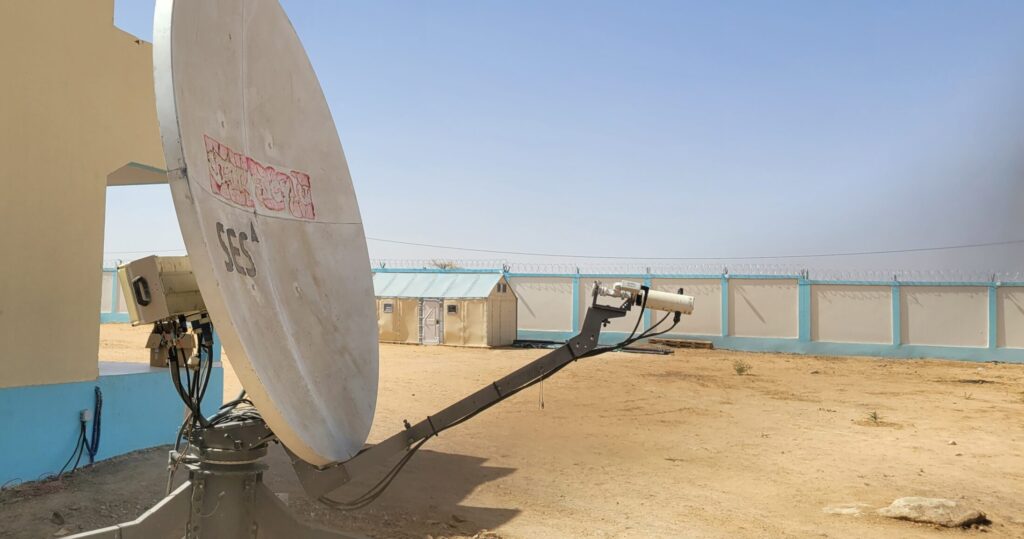
On 30 August 2017, UNICEF requested the support of emergency.lu to strengthen communications capacity for ongoing operations in the region. In response, Luxembourg deployed an emergency.lu regular satellite communication kit to the UNICEF office in Tshikapa, one of the main operational hubs in Kasai.
The system, installed by trained UNICEF staff, provided reliable internet connectivity to UNICEF and its key partners, including OCHA and FAO. This shared service enabled multiple agencies to access a stable communication platform in an otherwise disconnected environment.