On 25 April 2015, a devastating 7.8 magnitude earthquake struck central Nepal, followed by powerful aftershocks that caused widespread destruction across mountainous and densely populated areas between Kathmandu and Pokhara. Entire villages were flattened, critical infrastructure collapsed, and telecommunications networks were severely damaged or rendered inoperable. The disaster claimed more than 5,500 lives and left thousands injured and displaced, triggering an immediate and large-scale international humanitarian response.
In the immediate aftermath, the lack of reliable communications became a major constraint. With terrestrial systems disrupted, humanitarian responders faced significant challenges in coordinating search and rescue operations, assessing needs, and organizing relief distribution in hard-to-reach areas.
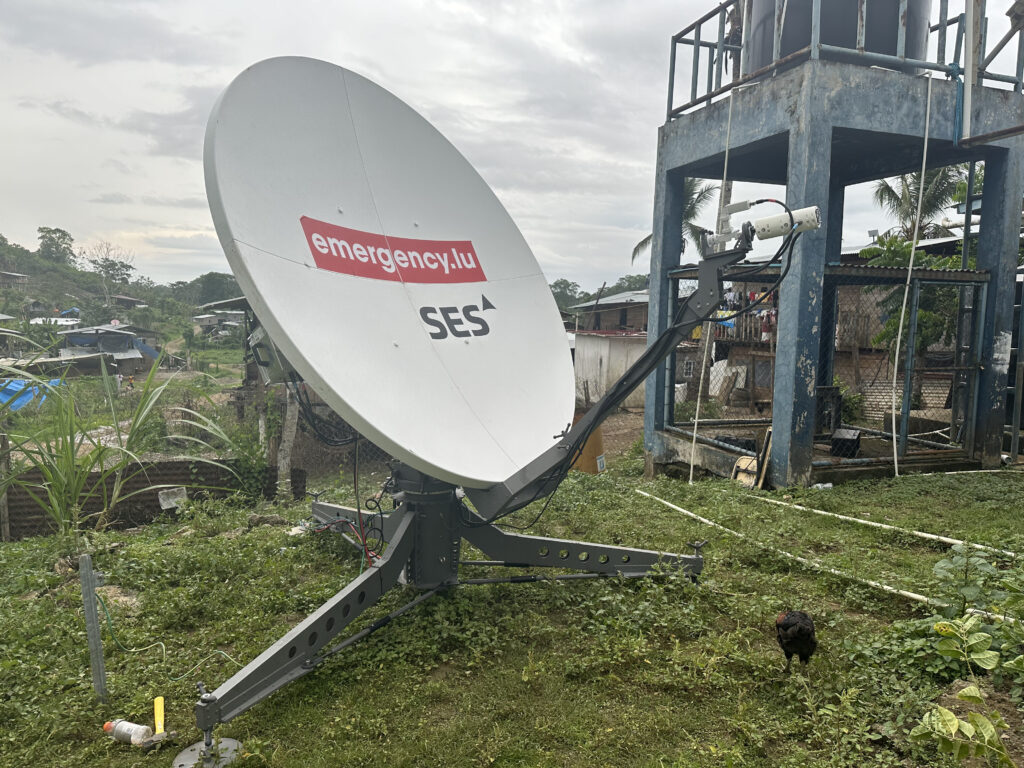
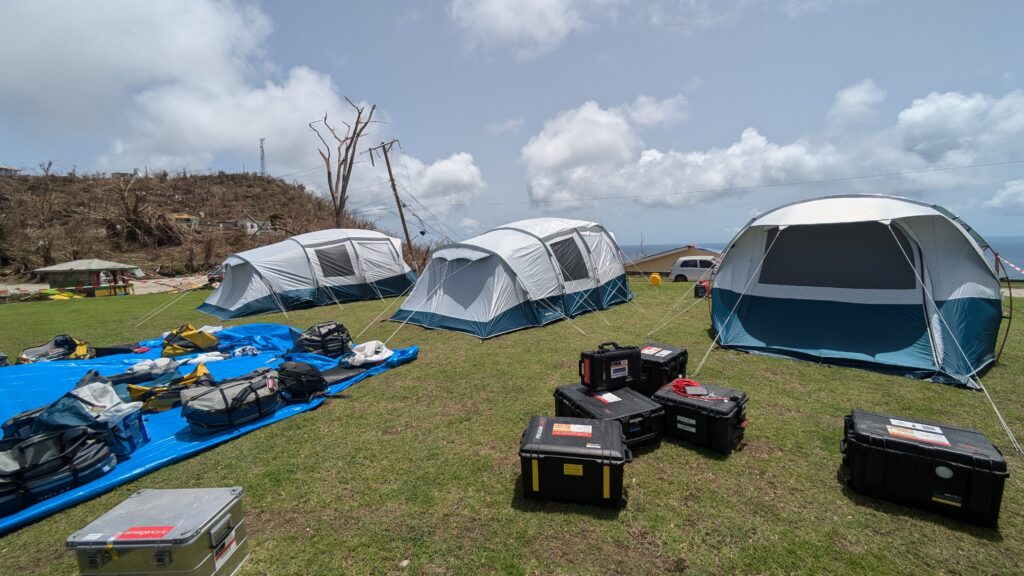
As part of the Emergency Telecommunications Cluster (ETC) response led by the World Food Programme (WFP), Luxembourg rapidly deployed emergency.lu satellite communication systems to help restore connectivity. A first rapid deployment kit was already on the ground and became operational early in the response, providing an immediate communications backbone for responders.
To reinforce capacity, two additional emergency.lu kits were redirected from Vanuatu, where they had been deployed following Cyclone Pam. This rapid reallocation of resources demonstrated the flexibility and global responsiveness of the emergency.lu system.
The deployed systems provided:
- Reliable satellite-based internet connectivity in affected areas
- Communication support for humanitarian coordination, reporting, and logistics
- Connectivity for field teams operating in isolated and mountainous regions
These services enabled humanitarian organisations to quickly establish coordination mechanisms, exchange information, and maintain links between field operations and central command structures.
In addition, SES, a key emergency.lu partner, contributed by providing free satellite capacity to NetHope, further enhancing connectivity for the broader humanitarian community and supporting digital coordination efforts during the crisis.
Through its rapid deployment and integration into the ETC framework, emergency.lu played a crucial role in restoring communications in one of the most challenging disaster environments, where geography and infrastructure damage significantly complicated the response. The operation highlighted the importance of agile, scalable satellite solutions in supporting large-scale emergency operations and ensuring that responders could act quickly and effectively in the critical first phase following a major natural disaster.